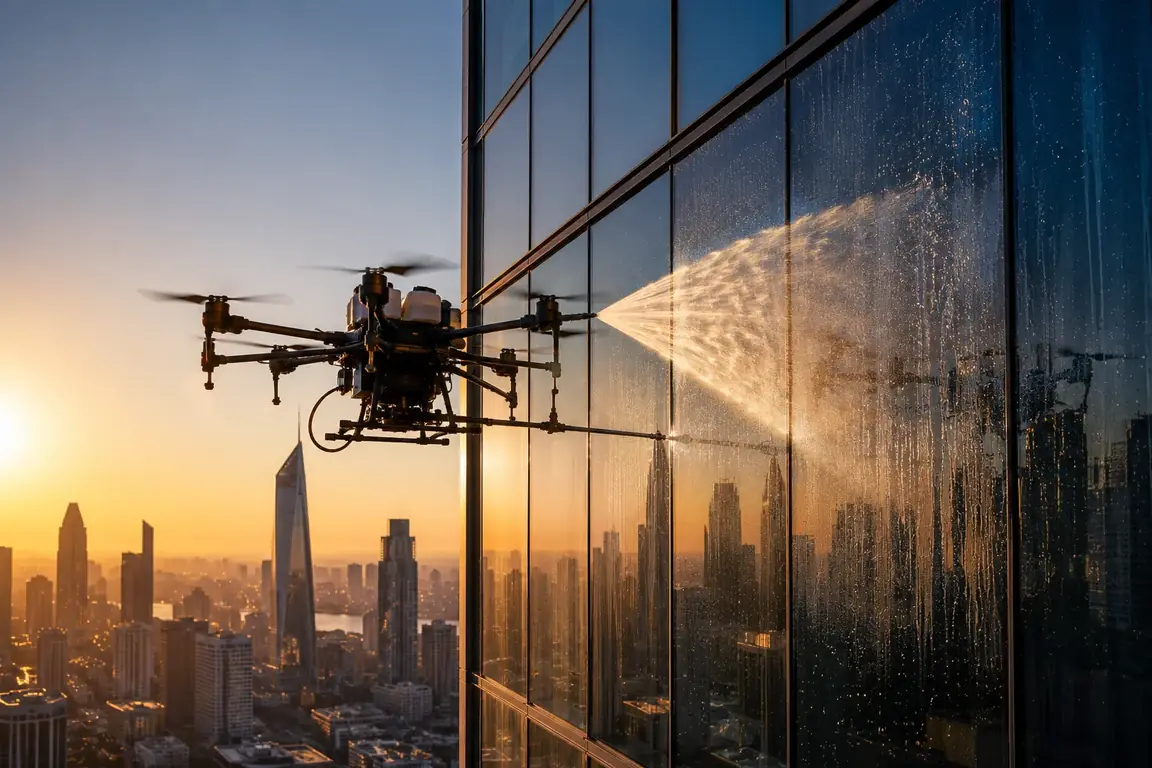
Tethered drone washing for large glazed, clad and roof surfaces, backed by IRATA rope access for detailed areas and heavier soiling. A low-disruption way to clean big surfaces, with nobody working at height.
Large glazed facades, metal cladding and wide roofs collect a film of pollution, dust and organic growth that dulls the building and, on glass, reduces the light coming in. A tethered drone washes these surfaces from the air, supplied with water and cleaning solution through a hose from a ground unit, so large areas can be covered quickly.
Drone washing is a spray-and-rinse method. It works best on large, fairly uniform surfaces with light to moderate soiling. It can't scrub, and it doesn't reach deep recesses or delicate detail, so we use rope access technicians for those areas and for heavier staining.
Because the work happens from the air, nobody works at height and there's no scaffold, cradle or MEWP taking up the street.
Who it's for

A cradle is efficient if your building has a working one. A MEWP needs road or ground space and runs out of reach on taller elevations.
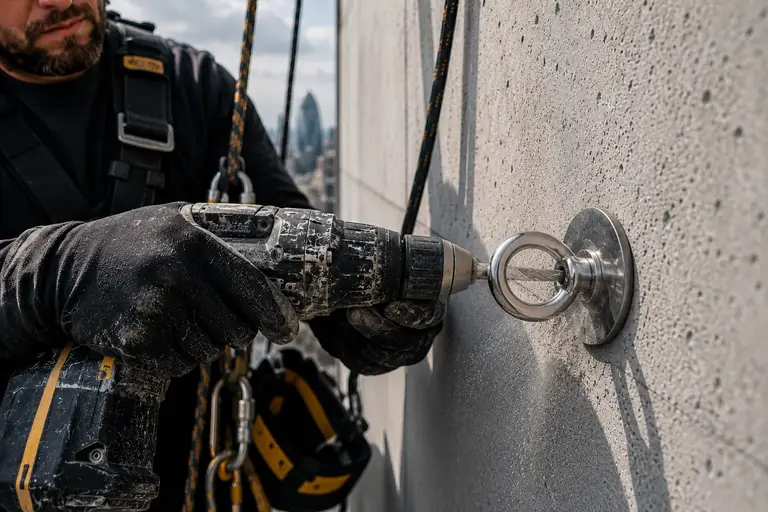
Best for detail, recesses, frames and heavier soiling, because technicians clean by hand, panel by panel. Slower over very large, uniform areas.
The quickest way to wash large, uniform glass, cladding and roof areas, with no rigging and no one working at height.
For heavy staining, intricate facades or a detailed finish on glass, rope access cleaning is the better method. Many buildings get the best result from both: drone for the large areas, rope access for the detail.
Before we quote, we look at the building and the task in person. On the visit we check:
Whether drone cleaning, rope access or a mix suits each area, a cleaning schedule, and a quote.
Request a Site SurveyWe assess the surfaces and site, then plan the flight areas, the cordon and the water and tether set-up.
The ground unit and tether are set up, and the area below is cordoned off so no one is underneath the drone while it works.
Surfaces are washed and rinsed systematically, then checked. Any areas that need hand cleaning go to our rope access team.
Flights are planned and flown in line with UK Civil Aviation Authority rules for the location, with a cordoned area below the drone, and work is stopped if wind or weather exceed safe limits.
Because the drone is tethered and supplied from the ground, it works within a controlled area. Where rope access is needed for detail work, it is carried out by our IRATA-certified technicians.

For large, uniform surfaces with light to moderate soiling, drone washing gives a good, even result quickly. It doesn't scrub, so for heavy staining, frames and detailed areas we use rope access. Many buildings use a mix of both.
We don't fly over people who aren't involved in the work. The area below is cordoned off, flights follow UK CAA rules for the location, and we stop work if the weather turns unsuitable.
Yes, it can wash and rinse large areas of glass. For a detailed finish on frames, edges and recesses, we follow up with rope access cleaning.
Drone cleaning needs calm, dry conditions. We plan around the forecast and reschedule if wind or rain would affect safety or the quality of the clean.
Usually access to a water supply, a safe ground area for the equipment, and permission from the building owner. We'll confirm exactly what's needed at the survey.