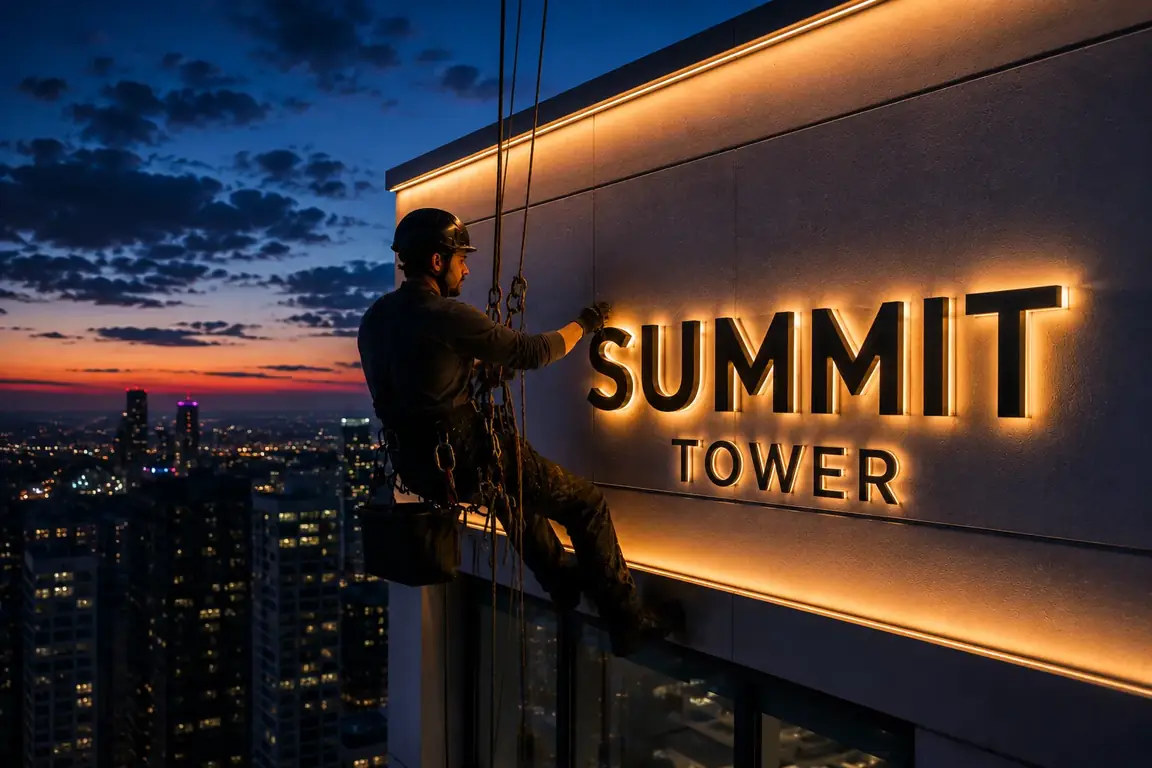
Quick answer: High-level signs combine weight, wind load and electricity above public areas, so they need regular checks of fixings and brackets, electrical inspection by a qualified electrician (BS 7671), cleaning of faces and LED modules, post-storm checks, and an up-to-date record. A practical schedule is visual checks every 6–12 months, close-access fixing and condition checks annually, periodic electrical inspection at intervals the electrician sets, and immediate checks after storms or impacts.
Why high-level signs need attention
- Fixings corrode and fatigue, especially in exposed positions.
- Wind load on large sign faces is significant, and storms can loosen or detach them.
- Water ingress into illuminated signs causes electrical faults and failures.
- LED modules and drivers fail over time. Dark segments look bad and can point to a deeper fault.
- Birds nest on and behind signs, blocking drainage and ventilation.
Maintenance schedule
| Frequency | Task | Who |
|---|---|---|
| Monthly (from the ground) | Lighting function; visible damage | Facilities team |
| 6–12 monthly | Clean faces and modules; check seals; clear nests and debris | Rope access / signage contractor |
| Annually | Close-access check of fixings, brackets, structure, drainage | Rope access with signage competence |
| Periodically (interval set by electrician) | Electrical inspection and testing | Qualified electrician (BS 7671) |
| After storms / impacts | Visual and close-access check | Rope access |
Electrical safety
- Electrical work on signs must be done by competent, qualified electricians in line with BS 7671 and the Electricity at Work Regulations 1989.
- Before any physical work near illuminated signs, circuits should be safely isolated and locked off.
- Rope access teams without electrical qualifications should limit themselves to cleaning and mechanical checks with circuits isolated, or work alongside an electrician.
Planning and consent
Illuminated and many other signs need advertisement consent under the Town and Country Planning (Control of Advertisements) (England) Regulations 2007. Replacements that change size, illumination or position may need fresh consent. Listed buildings and conservation areas have extra controls.
FAQ
How often should building signs be inspected?
Close-access fixing checks at least annually, plus ground-level checks more often, and after storms. Electrical inspection intervals are set by the electrician based on the installation.
Can rope access technicians fix LED signs?
They can provide access, clean, and carry out mechanical checks and repairs. Electrical work should be done by, or under the supervision of, a qualified electrician.
Who's responsible for a sign on a tenant's unit?
Usually set out in the lease. Often the tenant owns the sign and the landlord controls the building. Agree it in writing.
Talk to us about signage access
See our building maintenance and services, or request a site survey.
Sources
- BS 7671, Requirements for electrical installations (IET Wiring Regulations).
- Electricity at Work Regulations 1989.
- Town and Country Planning (Control of Advertisements) (England) Regulations 2007.


