24/7 Emergency Rope Access
07469 343612
Blog
Practical guides on rope access, façades and building maintenance for London building and facilities managers.
Practical guides on rope access, façades and building maintenance for London building and facilities managers.

Is rope access right for your job? A task-by-task guide to what it does well, where it struggles and when scaffold or a MEWP is better.
Read the guide →
Beyond the annual BS 7883 inspection, seven situations mean your roof anchors need reviewing, such as refurbishment, new plant and missing records.
Read the guide →
A façade clean often uncovers defects the dirt was hiding: cracks, open joints, failed sealant, rust and spalling. What each means and what to do next.
Read the guide →
After a roof repair you should get more than an invoice. What the report should contain: photos, cause, materials, limits, test results and warranty.
Read the guide →The IRATA Level 3 is responsible for safety on every rope access job. What they do before, during and after the work, and why to ask for one by name.
Read the guide →
What to expect from a rope access site survey: how long it takes, what the surveyor checks, what to prepare, and what you get afterwards.
Read the guide →What a proper façade inspection covers: close visual checks, tap testing, fixings, sealant, glazing, copings and drainage, and the report you should get.
Read the guide →Before approving façade waterproofing, ask these nine questions about cause, product, breathability, testing and warranty.
Read the guide →
Water entering a façade often appears metres away. How water travels through cavities, parapets and penetrations, with six common entry routes.
Read the guide →
Most external paint failures are preparation failures. The prep steps for render, masonry, metal and timber, and the tests that prove a surface is ready.
Read the guide →Leaks, ponding, slipped slates, lifted flashings, blocked outlets: seven warning signs a commercial roof needs inspecting, and how urgent each is.
Read the guide →A clear scope of works gets you accurate, comparable quotes. What to include for façade and roof maintenance, with a fill-in template and worked example.
Read the guide →How a rope access roof inspection works on steep, high or fragile roofs: what's checked, safety around fragile surfaces, and the report you get.
Read the guide →Scaffolding can cost retail, hotel and office buildings far more than its hire price: lost footfall, lost light, security risks and complaints.
Read the guide →Parapets, copings, cornices, chimneys and set-backs are where defects hide. How rope access inspects them up close, and what binoculars and drones miss.
Read the guide →What a façade cleaning survey checks: material, soiling type, trial panels, warranties, water supply, run-off and access, and what you get afterwards.
Read the guide →Should you inspect a roof before repairing it? When to go straight to repair, when an inspection saves money, and how to combine both in one visit.
Read the guide →Regular external cleaning protects warranties, extends material life, catches defects early and supports lettings. The business case for asset managers.
Read the guide →
Pure-water cleaning, low-pressure washing, steam and jet washing compared for commercial façades: uses, damage risks and how to choose.
Read the guide →
Too many defects, not enough budget? A simple risk-based way to prioritise façade and roof defects by safety, water ingress and deterioration.
Read the guide →Why London stone and brick go black, which cleaning methods remove pollution staining safely, what can't be removed, and when consent is needed.
Read the guide →How to plan rope access on an occupied office, hotel or residential building: notices, exclusion zones, entrances, privacy, noise and timing.
Read the guide →How repairs to steep, high or fragile roofs are planned: access, anchors, fragile surfaces, materials handling, weather and the public below.
Read the guide →Build an annual external cleaning programme for a commercial building: what to include, a sample 12-month calendar, contract terms, KPIs and how to budget.
Read the guide →Planning a high-level sign replacement on an occupied building: consent, removal, electrical isolation, out-of-hours work and keeping the entrance open.
Read the guide →Façade inspection on an occupied building: tenant privacy, photos and GDPR, noise from tap testing, entrances and timing, with a communication plan.
Read the guide →What permanent roof anchor points are, the BS EN 795 types, BS 7883 annual inspection, and the records building owners should keep.
Read the guide →Why wind, rain, ice and lightning stop work at height, who decides, and how to plan programmes and contracts around weather delays.
Read the guide →Cleaning, gutters, sealant, inspection and small repairs in one rope access visit: which tasks combine well, which don't, and how to plan it.
Read the guide →How to tell tenants, residents and neighbours about façade or roof work: what to include, when to send it and a sample notice you can adapt.
Read the guide →A practical inspection schedule for building exteriors: façades, roofs, gutters, sealant and anchors, with recommended intervals and standards.
Read the guide →BMUs and cradles suit some buildings; rope access suits others. How they compare on cost, flexibility, inspection duties and as a fallback.
Read the guide →Keeping high-level signs and LED displays safe and working: fixing checks, electrical safety, cleaning, storm checks and advertisement consent.
Read the guide →Is rope access only for tall buildings? Always cheaper? Less safe than scaffold? Eight common myths about rope access, and what is actually true.
Read the guide →What a useful façade or roof condition report contains: defect schedule, photo referencing, urgency ratings, limitations and recommendations.
Read the guide →From sign-in and briefing to rigging, work and handover: a step-by-step look at a typical rope access day and what building managers need to do.
Read the guide →How high-level cleaning is kept safe for pedestrians and building users: exclusion zones, tethered tools, spray drift, run-off, signage and weather.
Read the guide →Planning façade or roof works on a residential block? Section 20 consultation, resident communication, privacy and safety points for managing agents.
Read the guide →How to spot failing sealant before it leaks: cracking, hardening, adhesion loss, gaps and staining, and what each sign means.
Read the guide →Planning façade or roof work at night or weekends: noise rules, safety, lighting, access and the trade-offs against working in normal hours.
Read the guide →A practical pre-work checklist for facilities managers commissioning high-level maintenance: documents, anchors, asbestos, RAMS, permits and tenants.
Read the guide →Acrylic, mineral (silicate), elastomeric, siloxane and anti-carbonation coatings compared: breathability, flexibility and where each is best used.
Read the guide →Is your façade dirty, damaged or at the end of its life? A simple decision guide for commercial buildings, with signs and the order to act.
Read the guide →Plain-English definitions of the terms used in façade inspection, roof work and rope access, from anchors and copings to RAMS and IRATA levels.
Read the guide →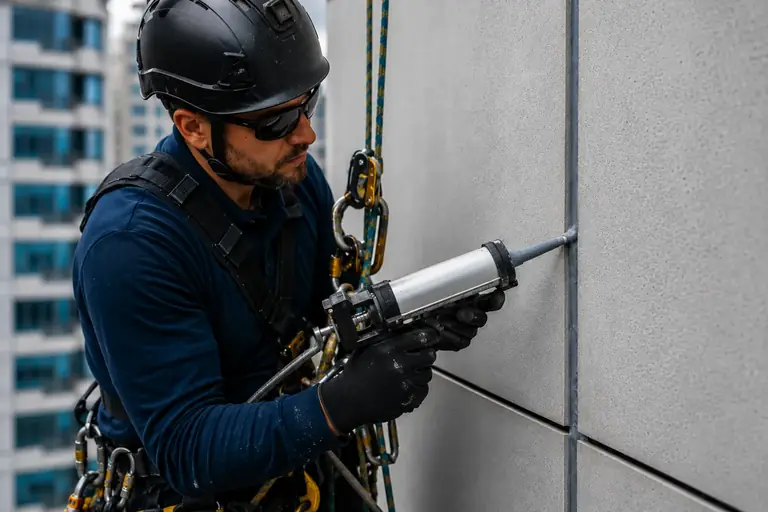
Why façade sealant joints fail: poor joint design, three-sided adhesion, wrong movement class, bad prep, incompatibility and UV ageing.
Read the guide →Single-point anchors, horizontal lifelines, rigid rails and deadweights: how roof anchor systems differ, what suits which building and what to check.
Read the guide →Specifying external painting: access options, coating systems, surface prep, weather windows, lead paint, warranties and repaint life.
Read the guide →Which sealant for which joint? How silicone, polyurethane, hybrid (MS polymer), acrylic and polysulphide sealants differ, and what to match to your façade.
Read the guide →Drone and rope access façade inspections compared: speed, detail, tap testing, CAA rules, and when to use both.
Read the guide →What a useful façade or roof inspection report includes: scope, limits, located photographs, priorities and recommendations, and the red flags to spot.
Read the guide →
Can drones clean buildings? Drone and rope access cleaning compared: what each can clean, quality, chemicals, CAA rules and the limits of spraying.
Read the guide →What a building condition survey is, when you need one (buying, leasing, maintenance planning) and how rope access reaches high-level areas.
Read the guide →After a storm: what to check on your façade and roof, how to make it safe, what to photograph for insurance, and when to call in rope access.
Read the guide →Each façade material needs its own cleaning method. What to use and avoid on glass, aluminium, render, stone, brick and terracotta.
Read the guide →What building envelope maintenance covers, typical component lifespans, and how to build a simple planned programme for a commercial building.
Read the guide →Bird droppings on a commercial façade: health risks, safe removal, the legal rules on nests, and the proofing that stops it coming back.
Read the guide →How to take before-and-after façade cleaning photos that prove results: same angle and light, references, timestamps and a simple report.
Read the guide →Avoid, prevent, minimise: the order the law expects you to think about work at height, what it means for building managers and where rope access fits.
Read the guide →After winter, check the roof, façade, gutters and fixings for frost and storm damage, and plan sealing, painting and cleaning for the dry months.
Read the guide →What a rainscreen cladding inspection covers: fixings, joints, drainage and panel condition, and why fire safety reviews are a separate, specialist matter.
Read the guide →What a permit to work is, when buildings use one for roof and façade access, what it should contain and how it fits with RAMS and contractor control.
Read the guide →Small details at roof level cause big leaks. How copings, parapets and flashings fail, what staining reveals, and how to inspect and repair them.
Read the guide →Working on a listed building or in a conservation area? Which consents may apply, which methods suit historic fabric and what to avoid.
Read the guide →Blocked gutters and outlets cause overflow, damp and frost damage. How often to clear them on commercial buildings, and how it's done at height.
Read the guide →Standing water, blisters and splits are the usual signs of an ageing flat roof. What causes them, how to inspect safely and when to repair or replace.
Read the guide →Pure water, soft washing, pressure washing, steam, chemicals and drones: how each façade cleaning method works, what it suits and where it goes wrong.
Read the guide →White crusty deposits on brick, stone or render are a sign of moisture. What efflorescence is, what causes it and how to fix it properly.
Read the guide →Tethered drones can wash large glass, cladding and roofs without anyone working at height during the washing stage. What they do well, where they fall short and when to use rope access.
Read the guide →How curtain walling keeps water out and what ages it: gaskets, sealant, drainage and glazing units. Signs of failure and what to check.
Read the guide →Each façade material needs a different cleaning method. What suits glass, aluminium, stone, brick and render, and what damages them.
Read the guide →Condition survey, façade inspection, drone survey, structural inspection: what each covers, who does it and which one you need.
Read the guide →Green, black or orange growth on a façade holds moisture and spoils the finish. Why it appears, how to treat it, and how to stop it coming back.
Read the guide →Loose cladding, damaged signage or a torn roof after a storm? A step-by-step guide for building managers: make safe, document and get help.
Read the guide →What a risk assessment and method statement (RAMS) should contain for rope access work, how to review one, and the red flags to look for.
Read the guide →How contractors protect pedestrians and occupants during work at height: exclusion zones, barriers, marshals, tethered tools and street licences.
Read the guide →Public liability, employers' liability and more: what insurance a rope access contractor should hold, how to check it, and the traps to avoid.
Read the guide →Rust stains, hollow patches and falling concrete: what causes façade concrete damage, which cracks are cosmetic, and when to involve an engineer.
Read the guide →What to have ready before a rope access contractor surveys your building: access, records, asbestos register, permits and tenant arrangements.
Read the guide →Two ropes, trained rescuers and a site-specific plan: how rope access rescue works and what to ask a contractor before work starts.
Read the guide →How to survey a difficult roof safely: fragile roofs and rooflights, edge protection, anchors and the access methods that avoid scaffold.
Read the guide →How to build a planned maintenance programme for a commercial façade: inspections, records, budgeting and what to schedule each year.
Read the guide →Water-repellent treatments and waterproof coatings can protect a façade, but only on sound surfaces. What they fix, what they don't, and how to choose.
Read the guide →Planning illuminated or high-level signage in London? Consent, structure, electrics, access methods and what to ask your installer.
Read the guide →Cracked, split or peeling façade sealant? How to spot failed joints, what causes it, and when to replace sealant on a commercial building.
Read the guide →How to plan an external repaint: surface preparation, coating choice, weather windows and what to ask contractors before you commit.
Read the guide →What a drone inspection of a façade or roof can reveal, what it can't, the UK rules operators follow, and when to follow up with rope access.
Read the guide →Roof anchors need regular inspection. What BS 7883 recommends, how often to inspect, and what happens when records are missing.
Read the guide →Rope access or a cherry picker? Compare reach, ground space, cost, wind limits and licences for London commercial buildings, with a decision guide.
Read the guide →IRATA certification in plain English: what Level 1, 2 and 3 technicians can do, how long certificates last, and how to verify them.
Read the guide →Water coming through the façade? How leaks are traced: leak diaries, close inspection, water testing to BS EN 13051, and what to do first.
Read the guide →Cracks, rust stains, failed sealant, spalling, leaks: 10 warning signs a commercial façade needs inspecting, rated by urgency, with what to do next.
Read the guide →Hiring a rope access company? Check IRATA status, Level 3 supervision, insurance, RAMS and rescue plans with this 10-point checklist and red flags.
Read the guide →Compare rope access, BMU cradles, water-fed poles and MEWPs for high-rise window cleaning in London, with typical frequencies and a planning checklist.
Read the guide →Glass every 1–3 months, metal cladding every 6–12 months, stone every 5–10 years: a practical façade cleaning schedule for London buildings.
Read the guide →Rope access vs scaffolding for London commercial buildings: set-up time, typical costs, licences and when each method is the better choice.
Read the guide →How rope access is priced in London: typical day rates, the 7 factors that move your quote, and how to compare quotes fairly.
Read the guide →Get your commercial building's roof, gutters, façade and fixings winter-ready, with a practical exterior checklist, timings and a storm plan.
Read the guide →