Quick answer: A rainscreen cladding system is an outer layer of panels fixed to the building with a ventilated gap behind it. The panels shed most of the rain, and the cavity lets moisture drain and dry. Routine inspection looks at the panels, fixings, joints, drainage and surroundings: loose, bent or cracked panels, corroded or missing fixings, open or failed joints, blocked drainage paths, staining and impact damage. Loose cladding is a falling hazard, so defects should be recorded and made safe promptly. Fire safety of external walls is a separate specialist subject that needs qualified fire engineers. Routine maintenance should never remove or alter the materials that matter for fire performance.
How rainscreen cladding is built
| Layer | Role |
|---|---|
| Outer panels | Aluminium, composite, ceramic, stone, fibre cement, terracotta or similar, giving the appearance and shedding most rain |
| Fixing system | Rails, brackets and fixings that hold the panels to the structure |
| Ventilated cavity | An air gap that lets water drain away and the system dry out |
| Insulation | Thermal layer on the wall behind the cavity |
| Substrate | The structural wall and any weatherproof membrane |
The cladding is not usually the only waterproofing layer. Water that gets past the panels should drain down the cavity and out at the base. That depends on the cavity staying clear and the details at joints, openings and bases working properly.
What an inspection checks
Panels
- Loose, displaced, bent, dented or cracked panels
- Panel alignment and any unusual movement or rattling in wind
- Staining or discolouration that might indicate water or corrosion
- Impact damage, particularly at low level, entrances and loading areas
- Coating damage, such as peeling or chalking on painted or coated panels
Fixings and support
- Corroded, loose or missing fixings and brackets
- Signs that fixings have moved or pulled out
- Evidence of movement in the rails and support system
- Fixings where different metals touch, which can corrode
Joints and seals
- Open joints and failed sealant where it is used. See façade sealant failure
- Damaged gaskets or weatherproofing at openings
- Weathering details at window reveals, corners, parapets and bases
Drainage and cavity
- Weep paths and drainage openings blocked by debris, nests or growth
- Evidence of water running down or staining the face below joints
- Damage at the base of the cladding, where water leaves the system
Surroundings
- Coping, flashing and roof edge details that shed water onto the cladding
- Signage, fixings and attachments screwed through the cladding
- Gutter and downpipe leaks that wet the façade. See gutter clearance
Signs that need prompt attention
| Sign | Why it matters |
|---|---|
| A loose or hanging panel | A falling hazard. Cordon the area and make safe |
| Missing fixings | The panel may be held by fewer fixings than designed |
| Rattling or noise in wind | Movement in the system |
| Water staining and streaks at joints | Water getting in or running where it should not |
| Bulging or distorted panels | Pressure, corrosion or damage behind |
| Damage after storms or impacts | Check immediately. See storm damage to a building exterior |
Cleaning cladding
Cladding finishes vary, and each has its own cleaning requirements. Using the wrong method can void a warranty or damage the finish. Follow the manufacturer's instructions. See cleaning different façade materials.
Fire safety is a separate subject
The fire performance of external walls is a specialist matter. It involves the materials in the system, the cavity barriers and the wider design, and it is assessed by qualified fire safety professionals. It is also subject to regulation, including under the Building Safety Act 2022 for higher-risk buildings.
For anyone doing routine maintenance:
- Do not remove, cut or alter cavity barriers, insulation or other components without competent advice
- Do not make changes to the cladding build-up without checking the effect on fire performance
- Report anything unusual, such as missing barriers or materials that do not match the records
- Keep records of the system and any works carried out
If you have concerns about the fire safety of your external walls, speak to a qualified fire engineer or your building safety adviser. An access contractor can help by providing safe access for inspection, but cannot assess fire safety.
How access helps
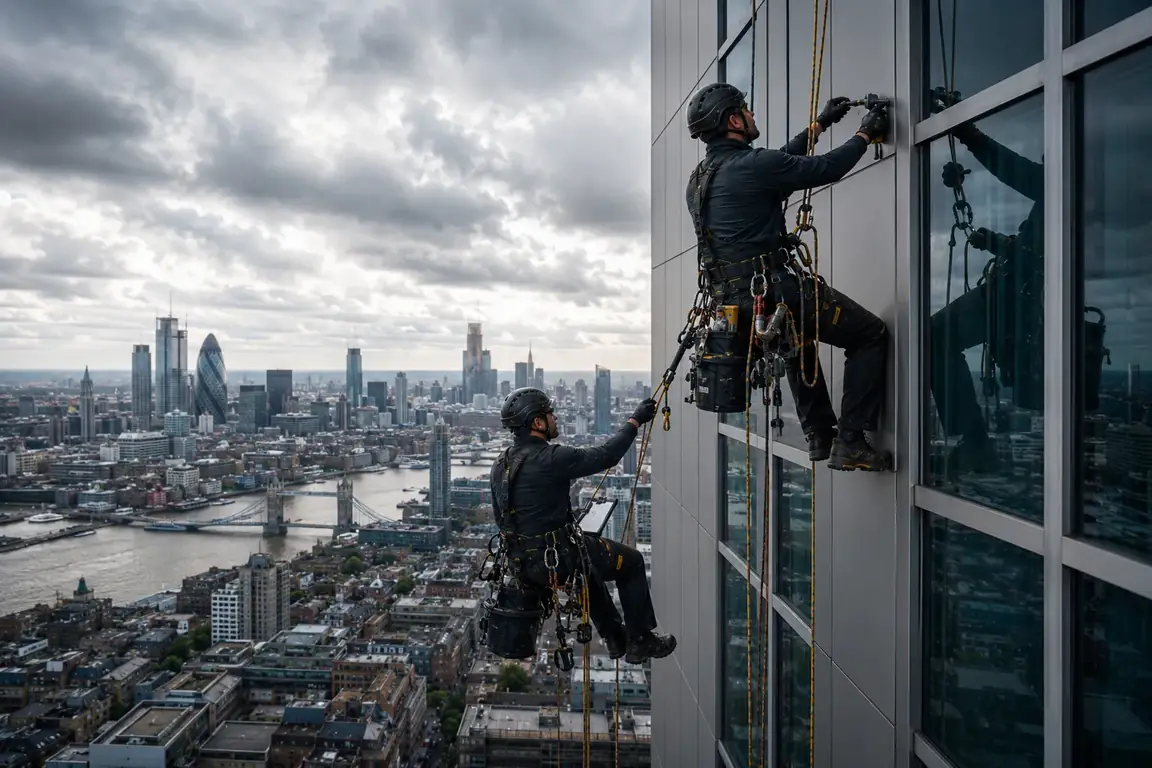
Reaching cladding panels and fixings for a close inspection is exactly the kind of task rope access suits: technicians can work along each elevation, look at fixings and joints at arm's length, record findings with photographs and make minor repairs on the same visit. A drone can screen the whole façade first. See what drone inspections can and can't show and rope access vs scaffolding.
A checklist for your records
- The drawings, specification and manufacturer details for the cladding system
- A baseline inspection with photographs of each elevation
- A schedule of fixing types and panel types
- Inspection dates and findings, with defect locations
- Repairs carried out, and the products used
- Warranty conditions and any required maintenance
- Fire safety information held for the building
For how this fits into a long-term plan, see planned façade maintenance.
FAQ
How often should rainscreen cladding be inspected?
At least annually, and after severe weather. Follow the system manufacturer's guidance, and increase frequency for older or exposed buildings.
Can loose panels be fixed by anyone?
Repairs should follow the system manufacturer's details and be carried out by competent people. A make-safe visit is the first step.
Does cladding inspection cover fire safety?
No. Fire safety assessments are specialist and separate. Maintenance inspections look at condition, not fire performance.
Do panels need cleaning?
Regular cleaning keeps them looking good and protects the finish, using methods that suit the material.
Talk to us
Tell us about your cladding and send photographs of any damage. We will tell you what we can see and how to reach it safely. Read about our building maintenance service, or request a site survey.
Sources
- The cladding manufacturer's installation, inspection and maintenance guidance.
- The Building Safety Act 2022 and Building Safety Regulator guidance for higher-risk buildings.
- BRE guidance on rainscreen cladding.


