Quick answer: After a storm, treat anything loose on the outside of the building as a falling hazard. In the first hours: keep people away from below damaged areas, do not climb up to look, photograph what you can safely see from the ground, call the emergency services if there is immediate danger, then arrange a competent inspection and make-safe, and tell your insurer early. Make-safe work, such as securing loose panels or signage and covering open roof areas, is a temporary measure. Repairs follow once the building is safe and the damage is understood.
Step 1: Protect people
The first priority is stopping anyone being hurt.
- Keep people away from entrances, pavements and car parks below damaged areas. Close or divert them if you need to.
- Use barriers, not just tape, and put someone on the cordon if the public might walk past.
- Do not send anyone up to look, particularly onto a wet or damaged roof. Strong winds may continue.
- Call 999 if anything is falling, someone is injured, or there is an immediate risk to the public.
- Isolate utilities if water, power or gas may be affected, and follow your building's emergency procedures.
Wind is a risk in its own right. High winds after a storm can move loose items that survived the storm itself, and they can make it unsafe to work at height. A responsible contractor will assess conditions before going up.
Step 2: Record what you can see from the ground
Evidence helps both the repair and any insurance claim.
- Photograph and film the damage from safe ground-level positions, with wide shots and close-ups
- Note the date, time and weather in the area
- Mark the location on a plan or by elevation and level
- Keep any fallen debris if it is safe to do so, as it may be needed as evidence
- Record interior damage, such as leaks, stains and water on floors
Do not move or clean up the evidence until you have recorded it, unless it creates a risk.
Step 3: Tell the right people
- Your insurer or broker, as soon as possible. Many policies have notification conditions, and early notice protects your claim.
- The building's owner, landlord or managing agent, if that is not you.
- Tenants and neighbours, if they are affected or if access has changed.
- The local authority, if public areas, the highway or neighbouring properties are involved.
- A competent contractor, to inspect and make safe.
Step 4: Get a competent inspection and make-safe
A make-safe visit has two aims: reduce the immediate danger, and find out what has happened. A contractor with access at height can:
- inspect the damage safely, including areas hard to see from the ground
- remove or secure loose cladding panels, signage, flashings and fixings
- cover or temporarily seal open roof areas, broken glazing and exposed insulation
- record the damage with photographs and a written report for your insurer
- advise on repairs and what can safely wait
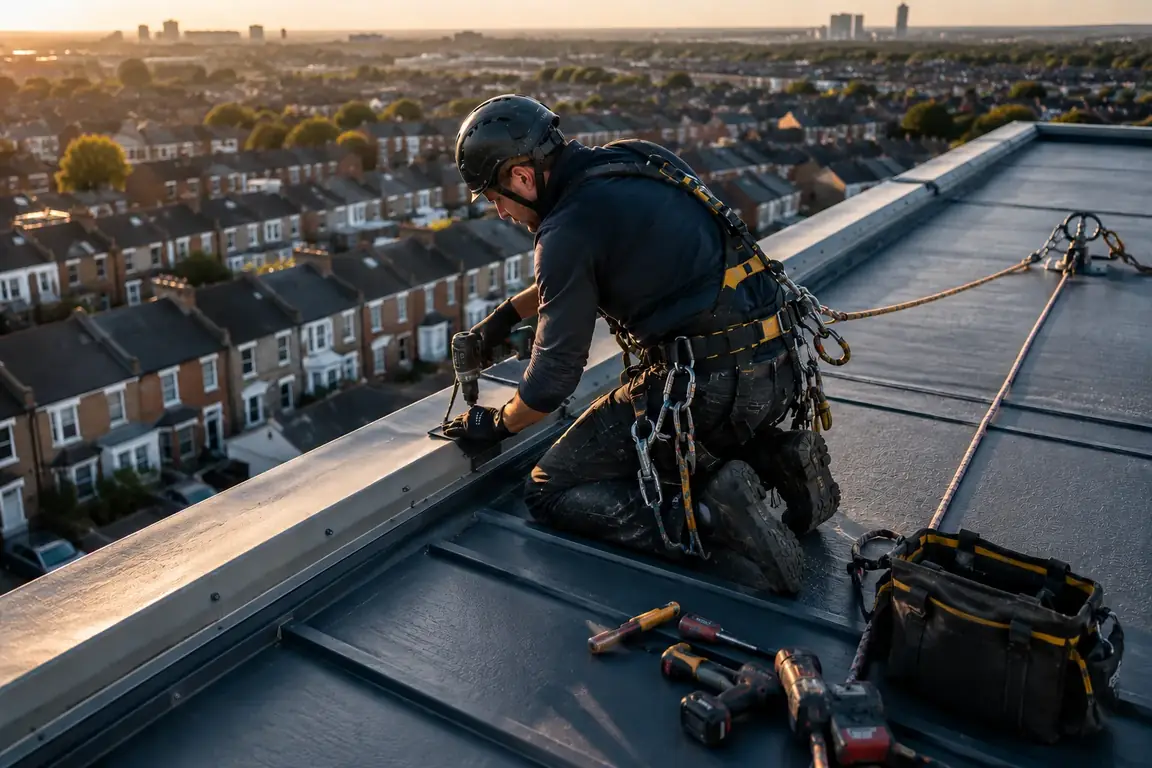
Rope access suits this work because it can reach damaged areas quickly without erecting scaffold first, and it can reach awkward positions. Where large sections are damaged or heavy lifting is needed, other methods may be needed. See rope access vs scaffolding and rope access vs MEWP.
What storm damage typically looks like
| Element | Common storm damage | First action |
|---|---|---|
| Roof coverings | Lifted, slipped or missing tiles, torn membranes, displaced flashings | Cover openings, keep people out of the area below |
| Copings and parapets | Loose or displaced copings | Secure or remove, and cordon the area below |
| Cladding panels | Loose, bent or detached panels | Make safe urgently; panels can fall |
| Signage | Loosened or detached signs and letters | Secure or remove, and isolate the power |
| Glazing and sealed units | Cracked or broken panes, failed seals | Protect the opening and keep the area clear |
| Gutters and downpipes | Detached or blocked | Re-fix or clear to avoid overflow |
| Plant and aerials | Moved or damaged equipment | Isolate and secure |
| Bird netting | Torn or flapping netting | Secure or remove |
Insurance: a few practical points
- Notify early. Check your policy for time limits.
- Keep records. Photographs, reports and invoices all help.
- Do not delay make-safe work to wait for the insurer. Preventing further damage is normally expected, and you should keep the evidence.
- Get a written report. A clear description of the damage and the work carried out makes the claim easier.
- Ask before permanent repairs, so the insurer can inspect if they want to.
Prepare before the next storm
Most storm damage is worse where there were existing weaknesses: loose fixings, ageing sealant, blocked outlets and untested anchors. A planned programme finds them first. See our winter exterior maintenance checklist and our guide to planned façade maintenance.
It is also worth having an emergency plan that says:
- who decides what to close or evacuate
- who to call and when, including an out-of-hours contractor
- where the roof and ground access keys and codes are
- where the anchor certificates and building records are kept
- how tenants will be told
FAQ
Should I go up and have a look myself?
No. Roofs and façades are dangerous after a storm. Look from the ground, and leave inspection at height to competent, equipped people.
Can anyone make a damaged building exterior safe?
Only people who are competent to work at height and who can do so safely. Use a contractor with the right training, equipment and a rescue plan.
Will insurance cover storm damage?
It depends on your policy. Check the cover and the conditions, and notify your insurer early.
How quickly can make-safe work be done?
It depends on the conditions, the access and the contractor's availability. Ask when you call, and explain what you can see.
Need urgent help?
If you have storm damage and need someone to inspect or make an exterior safe, call us on 07469 343612. We provide emergency rope access, and we will tell you honestly what we can do and how quickly. Read about our roof repairs and inspection and building maintenance services, or request a site survey.
Sources
- The Work at Height Regulations 2005 (legislation.gov.uk).
- HSE, Work at height guidance.
- Met Office weather warnings and guidance (for conditions and wind).
- Your own insurer's policy conditions and claims guidance.


