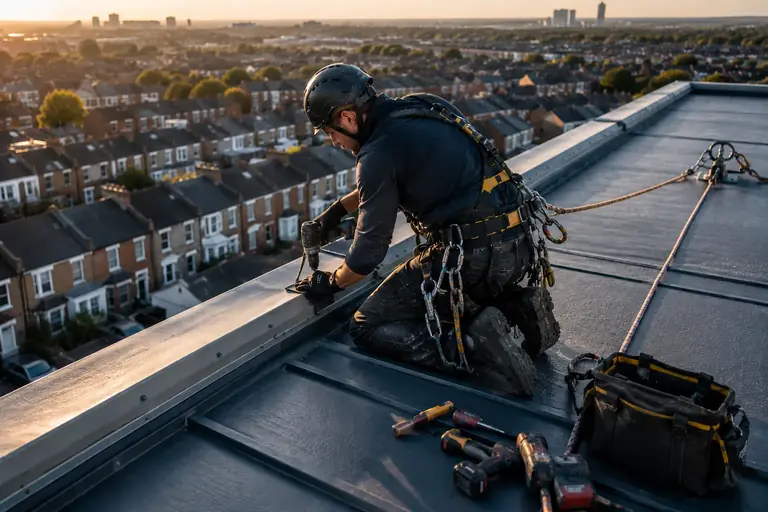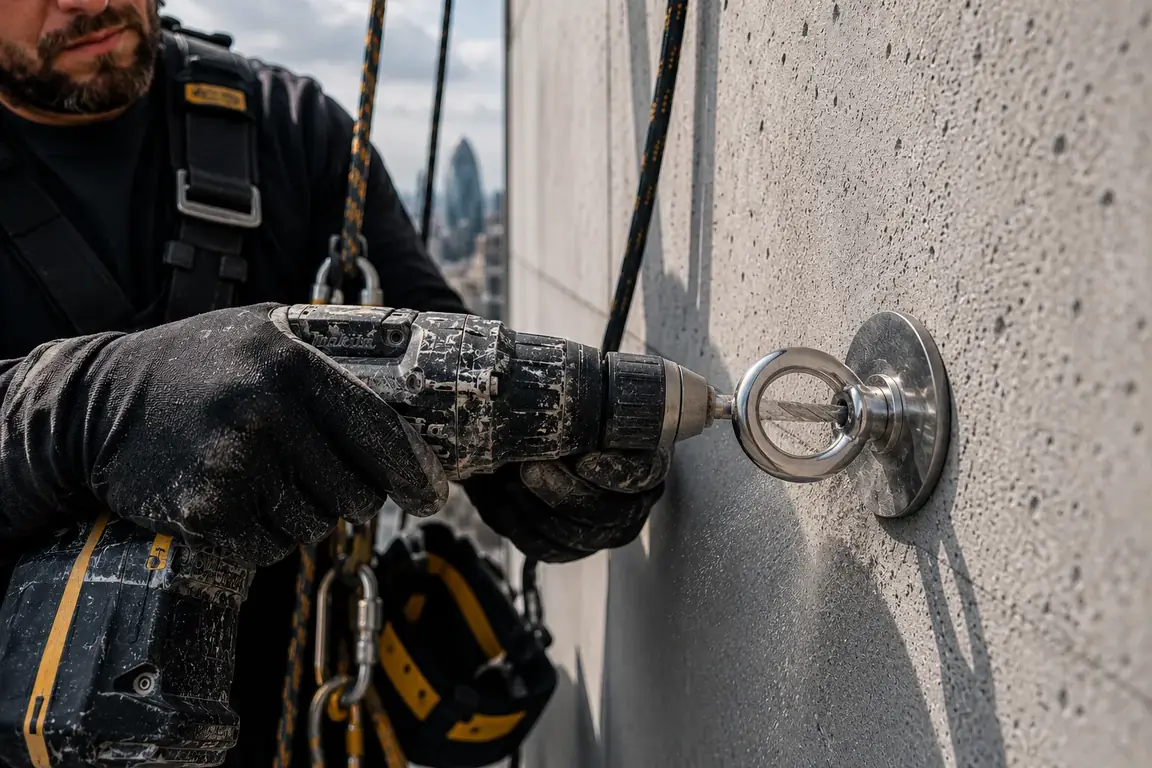
Quick answer: An annual inspection (BS 7883 recommends at least every 12 months) checks that existing anchors are still safe. A review of anchor provision asks a bigger question: does the building have the right anchors, in the right places, for the work it actually needs? Review it when (1) records are missing, (2) anchors fail inspection, (3) the roof or façade is altered, (4) new plant, PV or equipment is added, (5) maintenance methods change (e.g. a BMU is retired), (6) contractors keep needing workarounds, or (7) the building changes use or ownership.
Inspection vs review
| Annual inspection | Provision review | |
|---|---|---|
| Question | Are these anchors still safe to use? | Are these the right anchors for our maintenance needs? |
| Frequency | At least every 12 months | When a trigger occurs (below) |
| Output | Pass/fail per anchor, certificate | Gap analysis, recommendations, possibly a new design |
The 7 triggers
- Missing or incomplete records: no anchor plan, no installation certificates, unidentified fixings. Undocumented anchors shouldn't be used until they're verified.
- Failed inspections: if anchors are failing, find out why (corrosion, the substrate, the fixing type) and whether the system needs redesigning.
- Roof or façade works: re-roofing, re-cladding or new parapets can remove, cover or compromise anchors.
- New rooftop plant, PV or telecoms: equipment can block drops or create new areas needing access.
- Change of maintenance method: e.g. retiring or failing BMU, switching to rope access, or new cleaning frequencies.
- Repeated workarounds: if every contractor brings counterweights or rigs from questionable structure, the provision isn't fit for purpose.
- Acquisition, new lease or change of use: due diligence should confirm the anchor provision and records.
What a review covers
- Every elevation and roof area that needs maintenance, and how it will be reached.
- Existing anchors: type, location, condition and records.
- Gaps: drops without suitable anchorage, areas needing travel (lifelines or rails), edge protection needs.
- Options: additional anchors, lifelines, rails, deadweights, collective protection (guardrails).
- Records: an updated anchor plan and register.
The Work at Height Regulations 2005 hierarchy applies: where collective protection (e.g. guardrails) is reasonably practicable for routine roof access, it's generally preferred over personal fall protection.
FAQ
Who can carry out an anchor review?
A competent person with knowledge of BS 7883 system design and the building's maintenance needs, often an anchor system specialist working with the facilities team.
Is an anchor review a legal requirement?
The law requires work equipment to be suitable and maintained. A review is how you demonstrate suitability when circumstances change.
Can anchors be added without major works?
Often, yes. Many systems can be retro-fitted. The fixing method depends on the roof structure and covering, and roof warranties need considering.
Review your anchorage
See our building maintenance and services, or request a site survey. Related: permanent anchor points explained.
Sources
- BS 7883:2019; BS EN 795:2012.
- Work at Height Regulations 2005.