Quick answer: Get your commercial roof inspected if you see (1) leaks or ceiling stains on top floors, (2) water ponding on a flat roof more than 48 hours after rain, (3) slipped, cracked or missing slates and tiles, or debris on the ground, (4) lifted flashings or failed upstands, (5) overflowing gutters or blocked outlets, (6) blisters, splits or bare patches on the membrane, or (7) internal damp, mould or rising energy bills. Also inspect if the roof hasn't been checked in the last 12 months or after a major storm.
The 7 signs and how urgent they are
| # | Sign | Likely cause | Urgency |
|---|---|---|---|
| 1 | Leaks, ceiling stains, wet insulation on top floors | Failed covering, flashing, outlet or upstand | 🔴 Act now. Water spreads fast. |
| 2 | Debris on the ground: slate, tile, mortar, lead | Failing fixings, storm damage, chimney deterioration | 🔴 Cordon below and inspect |
| 3 | Ponding on a flat roof lasting more than 48 hours after rain | Poor falls, blocked outlets, deflection | 🟠 Within weeks. Ponding speeds up membrane failure. |
| 4 | Slipped, cracked or missing slates/tiles | Nail fatigue (common on older slate roofs), wind, frost | 🟠 Within weeks |
| 5 | Lifted or split flashings, failed mortar fillets | Wind, thermal movement, ageing | 🟠 Within weeks |
| 6 | Overflowing gutters / blocked outlets | Leaves, silt, nests, debris | 🟠 Clear before the next heavy rain |
| 7 | Blisters, splits, bare patches, open laps on membranes | Ageing, trapped moisture, foot traffic | 🟡 Plan repair. Escalates if leaking. |
Also watch for: damp and mould near the roof, rising heating bills (wet insulation insulates poorly), and sagging areas. Sagging needs a structural check.
Simple checks you can do safely
- From inside: top-floor ceilings, roof voids and plant rooms for stains and damp.
- From the ground: binoculars for slipped slates, lifted flashings and vegetation in gutters.
- From neighbouring windows (with permission): flat roof ponding and debris.
- After heavy rain: watch gutters and downpipes. Overflowing means blocked.
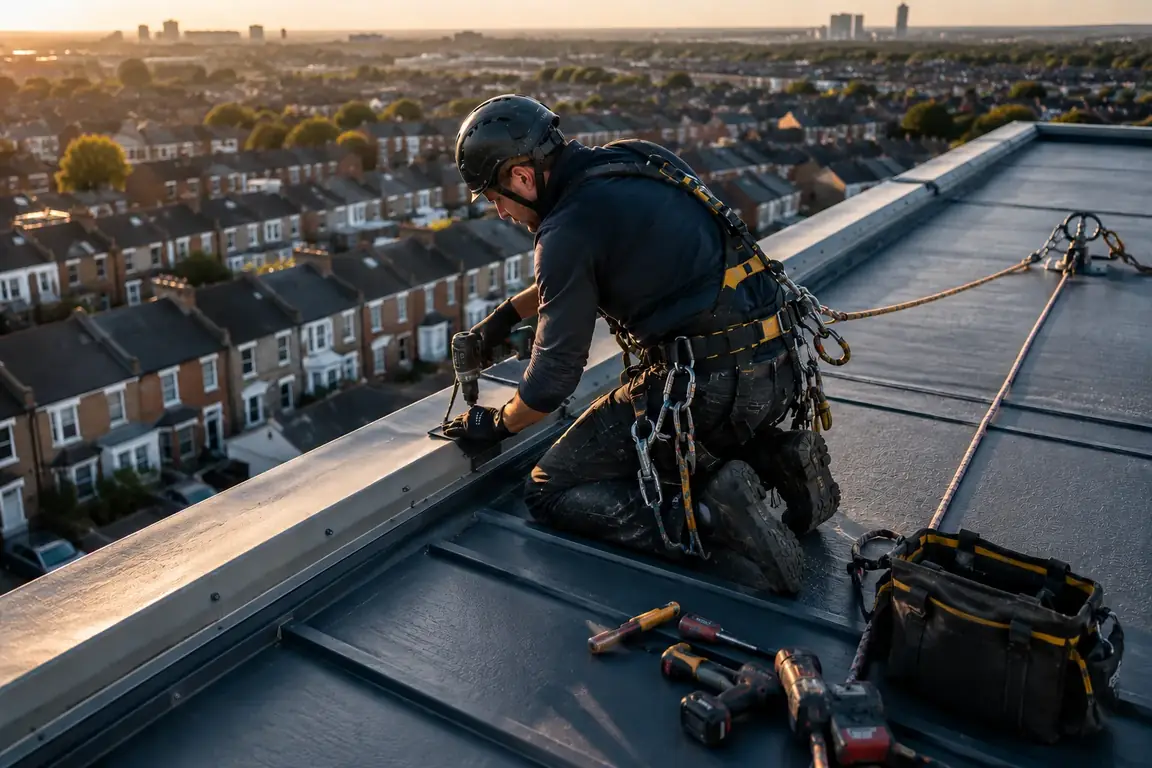
Don't go onto the roof yourself. Falls from and through roofs are among the most common causes of fatal accidents in roof work. Rooflights and older roof sheets can be fragile.
Why inspect before repairing
Leaks rarely enter where they appear. Water tracks along decks, insulation and structure. An inspection that finds the actual entry point prevents paying for repairs in the wrong place. See roof inspection or repair: which comes first?.
FAQ
How often should a commercial roof be inspected?
At least once a year. Twice (spring and autumn) is common good practice, plus after major storms.
Is ponding always a problem?
Small amounts that dry within 48 hours are common on flat roofs. Persistent ponding speeds up deterioration and can mean blocked outlets or poor falls.
Does my roof warranty require inspections?
Many manufacturer and installer guarantees require periodic maintenance and inspection. Check the documents.
Book a roof inspection
See our roof repairs and services, or request a site survey.


