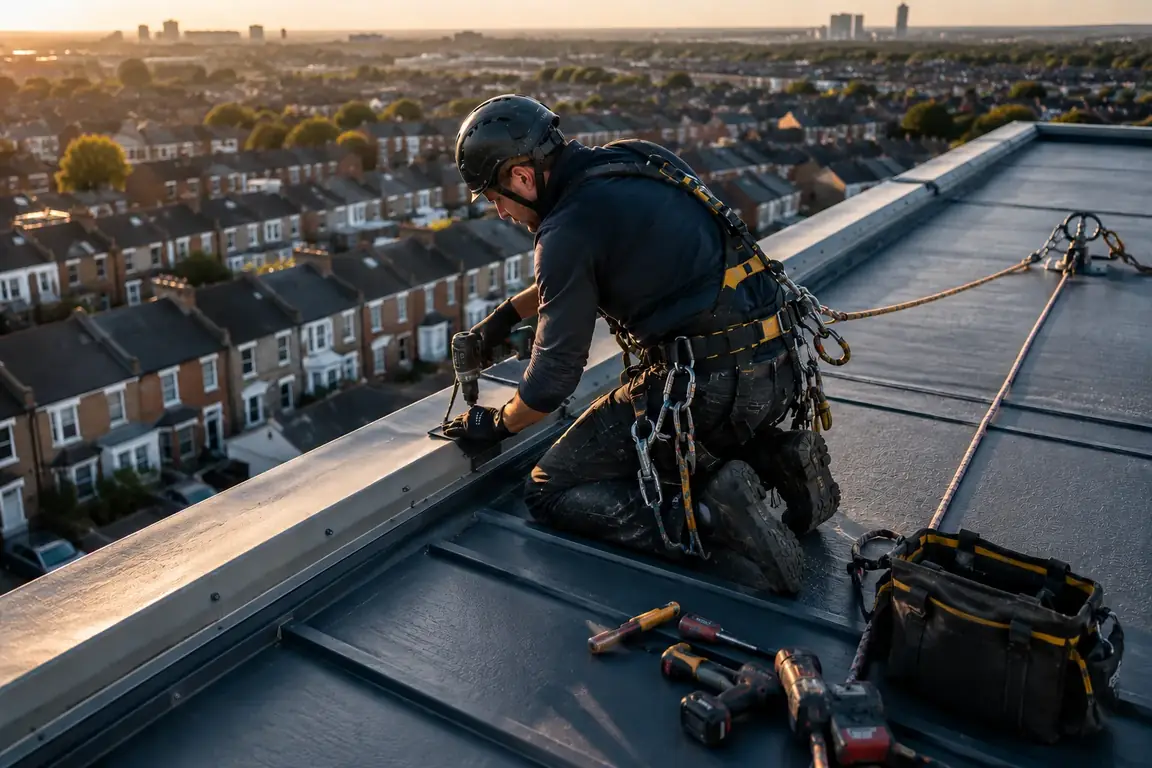
Quick answer: Inspect first if the cause isn't obvious. That includes leaks that appear away from any visible defect, recurring leaks after previous repairs, multiple symptoms, or a roof you know little about. Go straight to repair only when the defect is visible, isolated and clearly the cause, such as one slipped slate above a damp patch or a blocked outlet. The cost-effective middle path is "inspect and repair" in one visit: the team inspects, fixes small defects on the spot, and reports anything bigger.
Decision guide
| Situation | Best first step |
|---|---|
| One visible slipped slate directly above a fresh damp patch | Repair, and check the surrounding area |
| Blocked outlet, overflowing gutter | Clear/repair, and check for damage caused |
| Leak with no visible defect above it | Inspect (and possibly water-test) |
| Leak that came back after a repair | Inspect. The first repair probably missed the cause. |
| Several leaks or symptoms | Inspect, then plan repairs |
| Storm damage | Make safe, then inspect, then repair |
| Buying, leasing or budgeting | Inspect (condition survey) |
| Roof under warranty | Inspect and check warranty terms before any repair |
Why "just fix the leak" often fails
- Water travels: along decks, under membranes, down rafters, along insulation. The stain inside may be metres from the entry point.
- The obvious defect isn't always the cause. A cracked slate might be cosmetic while a failed valley lining is letting water in.
- Repeated "patch" repairs add up and can make the roof harder to diagnose.
The "inspect and repair" visit
This combines both:
- Agree limits in advance, e.g. "fix up to [x] slates, clear outlets, minor lead dressing; report anything else".
- Team inspects the full area and photographs everything.
- Small defects fixed on the spot.
- Report with what was fixed and what still needs doing, with priorities and estimates.
The result is one mobilisation, a fixed scope and no guesswork.
How to commission it
Tell your contractor:
- what you've seen (leak diary, photos, locations);
- what's been done before;
- your authority limit for on-the-spot repairs;
- what report you need.
See façade leak investigation for a structured approach to leaks that might be coming through walls rather than the roof.
FAQ
Is a roof inspection worth paying for if I know where the leak is?
If you're certain, and the defect is visible and isolated, repair directly. If the leak has come back before, inspection is usually cheaper than another failed repair.
Can an inspection and repair happen the same day?
Yes, for small defects within agreed limits. Larger repairs need materials and planning.
What if the roof needs replacing?
The inspection will show whether defects are isolated or widespread. A roofing specialist or surveyor should then advise on repair vs replacement.
Book an inspect-and-repair visit
See our roof repairs and building maintenance, or request a site survey.


