Quick answer: Flat roofs are never truly flat. They are built with a slight fall so water runs to the outlets. Most problems come from water that stays where it should not, or from a covering that is ageing, damaged or badly detailed. The usual signs are standing water that lingers long after rain, blisters, splits and open laps in the covering, and damaged edges and upstands. Inspect at least twice a year and after storms, clear outlets regularly, and record and photograph what you find. Small repairs done early are far cheaper than replacing a roof that has been allowed to leak, and a flat roof should only be walked with proper access and a plan.
Why flat roofs are demanding
A flat roof has to cope with water, sun, frost, foot traffic and plant, all on a surface with very little slope. The covering is thin compared with the structure beneath it, and the details at edges, outlets and upstands are small and exposed. When water gets in, it can spread under the covering and appear a long way from the damage.
The main types of covering
| Type | Notes |
|---|---|
| Single-ply membranes (such as PVC or TPO) | Sheets joined at welded or sealed seams. Sensitive to damage and poor seams |
| Built-up felt | Layers of bitumen felt, often with a mineral cap sheet. Can blister, crack and split with age |
| Mastic asphalt | A seamless hot-applied covering. Durable but can crack and blister |
| Liquid-applied coatings | Applied as a liquid which cures into a membrane. Used for repairs and refurbishment |
| Green and blue roofs | Vegetated or water-retaining systems built over a waterproofing layer |
The right inspection and repair approach depends on the type, so identify what you have, and ask for the manufacturer's guidance.
Common problems
| Problem | What you see | Likely causes |
|---|---|---|
| Ponding | Water standing on the roof long after rain has stopped | Poor falls, blocked outlets, deflection in the deck, or settled insulation |
| Blistering | Raised bubbles under the covering | Trapped moisture or air under the membrane |
| Splits and cracks | Open lines in the covering | Age, movement, thermal stress and impact |
| Open laps and seams | Edges or joints that have lifted or opened | Failed adhesive, welding or sealant |
| Damaged upstands and edges | Cracked, lifted or detached covering where the roof meets a wall or edge | Movement, poor detailing and weathering. See parapet, coping and flashing defects |
| Blocked outlets | Debris at drainage points and overflowing water | Leaves, silt and rubbish. See gutter clearance |
| Mechanical damage | Punctures, scuffs and crushing | Foot traffic, tools, plant and fallen items |
| Vegetation | Moss, weeds and seedlings | Standing moisture and debris. See algae, moss and biological growth |
| Failed penetrations | Leaks around pipes, vents and rooflights | Failed flashings and seals |
Is ponding a problem?
A small amount of water that dries within a day or two may be acceptable on some roofs. But persistent ponding matters because it:
- adds weight to the structure
- accelerates ageing of the covering, particularly in freezing and thawing
- concentrates leaks on any weak point
- encourages vegetation and dirt
- suggests there may be drainage or falls problems
Check the design information for your roof, because some roof types, such as green roofs and blue roofs, are designed to hold water.
How to inspect safely
Flat roofs look easy to walk on, but they have edges, openings and sometimes fragile areas such as rooflights. Before anyone goes up, settle how they will get there, what protects the edges and whether the roof can be walked on. See roof inspections: safe access and fragile roofs.
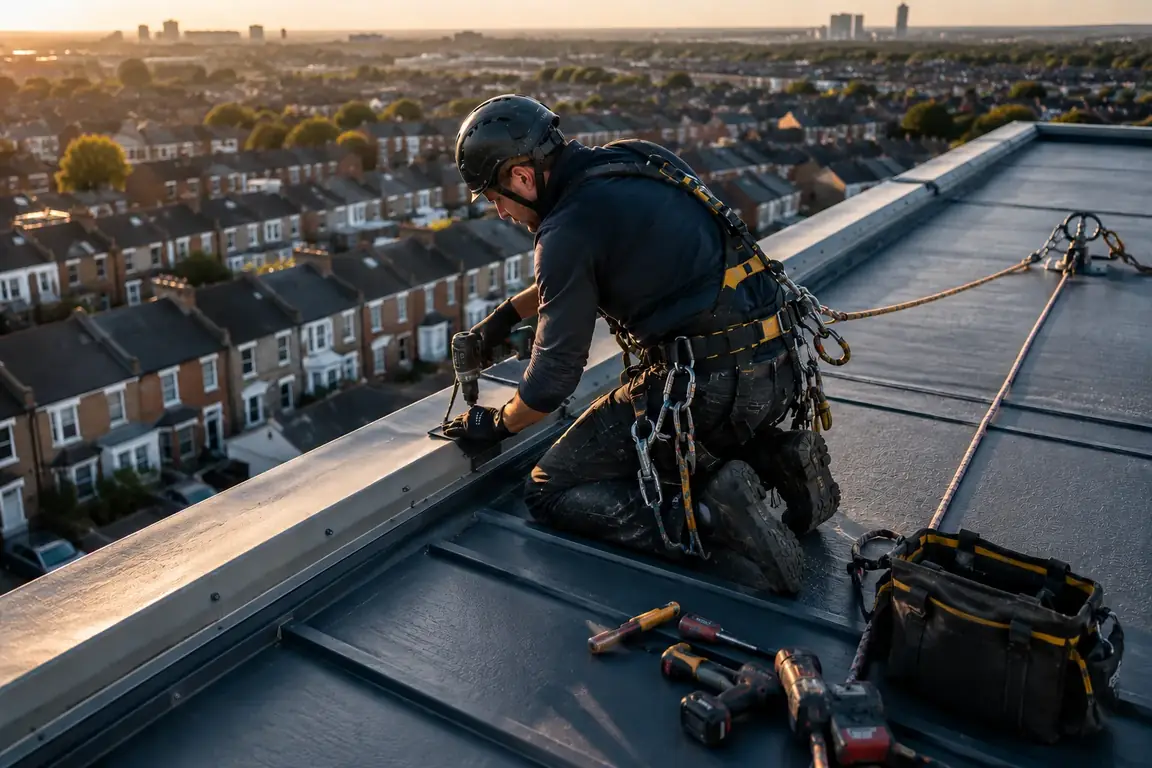
Where there is no safe access, a drone can screen the surface for ponding, damage and debris, and rope access can reach the edges and details. See what drone inspections can and can't show.
What a good inspection covers
- Overall condition of the covering, and its age if known
- Falls and ponding, ideally after rain, with photographs
- Outlets and overflows: clear and working?
- Seams, laps and joints
- Upstands, edges and flashings
- Penetrations, such as pipes, vents, flues, rooflights and plant supports
- Plant and equipment that may damage the covering or block drainage
- Signs of leaks inside, and where they are
- Anchors and edge protection
Keep dated records and photographs so changes can be compared year to year. See planned façade maintenance.
Repair or replace?
| Situation | Likely approach |
|---|---|
| Isolated splits, blisters or open laps in an otherwise sound roof | Local repair |
| Failed details such as upstands, flashings or outlets | Repair or replace the detail |
| Widespread failure, repeated leaks or wet insulation | Larger refurbishment or replacement |
| Roof near end of life but still watertight | Plan replacement and budget for it |
| Persistent ponding | Investigate the cause and consider re-profiling or additional drainage |
If insulation under the covering is wet, repairs on top may not be enough. A roofing specialist can advise, and moisture surveys can map where it is wet.
Weather and timing
Most roof repairs need dry conditions and temperatures within the product's range. Winter repairs may be temporary. See our winter exterior maintenance checklist and spring exterior maintenance checklist for what to check each season.
FAQ
How long does a flat roof last?
It depends on the covering, its quality, installation and maintenance. Manufacturers give expected lives, and regular maintenance helps to reach them.
Can I repair a split with sealant or tape?
Temporary repairs can reduce water ingress, but they may not last, and may affect warranties. Use a method that suits the roof type.
Why does the leak appear far from the roof?
Water can travel under the covering and along the structure before it drips through. A proper investigation traces it. See façade leak investigation.
How often should I inspect a flat roof?
At least twice a year, and after storms or any work on the roof.
Talk to us
If you are worried about a flat roof, send us photographs and the address. We can inspect the edges and details, and tell you what we see. Read about our roof repairs and inspection service, or request a site survey.
Sources
- BS 6229, Flat roofs with continuously supported coverings: code of practice. Check the current edition.
- Manufacturer guidance for the roof covering and its details.
- NFRC (National Federation of Roofing Contractors) technical guidance.


