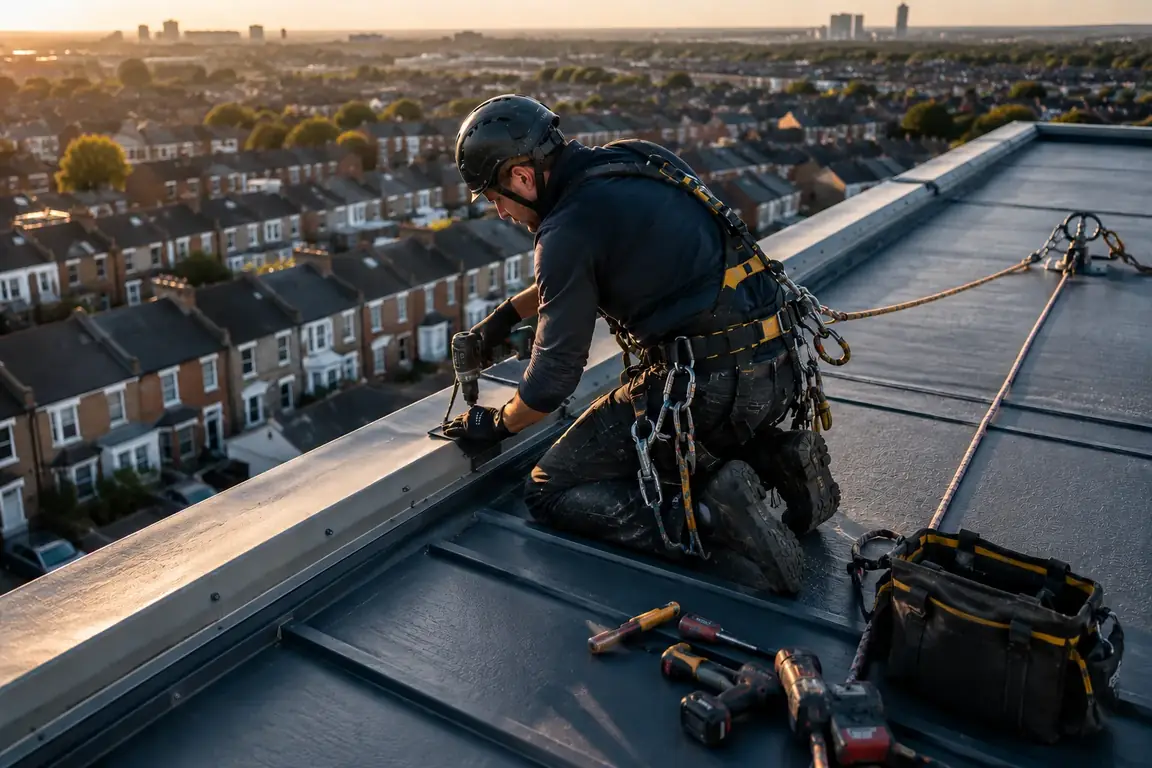
Quick answer: A roof inspection is only as safe as the way people reach and move around the roof. Before anyone goes up, confirm how they will get there, whether the roof can carry them, where the edges are and what protects them from falling. Rooflights and old cement or fibre sheets are a particular danger because they can break under a person's weight, and falls through fragile surfaces remain a recurring cause of serious injury and death. For roofs that are steep, high, fragile or have no safe permanent access, rope access or a drone can often survey the roof without anyone walking on it. Never let anyone onto a roof "just for a quick look" without a plan.
Why roof access is a real risk
Roofs combine several hazards: edges with no protection, surfaces that are slippery or fragile, hidden openings, wind, and the fact that people working alone are not seen if something goes wrong. The Work at Height Regulations 2005 require work at height to be planned, supervised and carried out by competent people, with the right equipment, and the HSE publishes detailed guidance on roof work.
Whoever controls the building shares responsibility for making sure contractors have a safe way onto the roof and are told about its hazards.
Fragile roofs and rooflights
A fragile surface is one that will not safely support a person's weight. Common examples include:
- rooflights and skylights, including ones that look strong or have been painted over
- old fibre-cement and asbestos-cement sheets, which become more brittle with age
- single-skin metal and plastic sheets with corroded or loose fixings
- glass and glazing in lantern and atrium roofs
- decayed timber or deteriorated decking under membranes
The rule is simple: treat any roof as fragile until a competent person has confirmed it is not, and never walk on or lean against rooflights. Tell contractors about any fragile areas in advance, and mark them clearly.
Questions to settle before anyone goes up
| Question | Why it matters |
|---|---|
| How do people get onto the roof: hatch, ladder, stair, or another route? | Roof hatches and ladders are a common source of falls |
| Is there permanent edge protection, such as a parapet of adequate height or guardrails? | Without it, anyone near the edge is at risk of falling |
| Are there fragile areas, and are they marked and guarded? | Prevents falls through the surface |
| Are there anchor points, and are they inspected and certified? | Needed if workers use harnesses. See our guide to anchor inspection |
| Does the roof contain asbestos, and is it in the register? | Disturbing it is dangerous |
| What is underneath: occupied rooms, walkways or the public? | Falling tools and debris need a drop zone |
| Who has the keys and who authorises access? | Avoids unauthorised or unsupervised access |
| What is the plan if someone is hurt? | A rescue plan must exist before work starts |
Asbestos
If the building was built or refurbished before 2000, roof materials such as cement sheets, flashings or insulation may contain asbestos. In non-domestic buildings, the Control of Asbestos Regulations 2012 require the people responsible for the premises to manage it, which usually means holding an asbestos register and management plan. Any contractor drilling, cutting or disturbing roof materials should be shown the register first.
Ways to survey a roof
| Method | Good for | Limits |
|---|---|---|
| Walking the roof with proper edge protection and walkways | Roofs with safe, permanent access and robust surfaces | Not suitable for fragile, steep or unprotected roofs |
| Rope access | Steep, high, fragile or confined roofs, and roofs with parapets and no safe walkway | Needs certified anchors or a rigging plan, and trained technicians |
| Drone survey | A quick first look at the whole roof without anyone on it. See what drone inspections can and can't show | Cannot touch, test or repair |
| Powered platform or cherry picker | Roof edges within reach from the ground | Limited reach, and needs firm ground and space |
| Scaffold with edge protection | Large repairs, re-roofing and long programmes | Time and cost |
Often the best approach is a drone first look, followed by rope access or walked inspection of the areas that need attention. See rope access vs scaffolding for how to weigh the options.
What a roof inspection should check
- Covering: splits, blisters, open laps, slipped or missing tiles and slates, and corroded or lifted metal
- Flashings, upstands and copings: lifted lead, open joints, loose cappings and failed sealant
- Outlets, gutters and downpipes: blockages, debris and standing water
- Ponding: areas where water collects
- Penetrations: vents, flues, rooflights and plant supports, and their weathering
- Fixings and plant: loose items that wind could lift
- Anchors and edge protection: condition and certification
- Signs of leaks inside, matched to what can be seen outside
A good inspection ends with photographs of each finding, a location plan and a priority list. Our winter exterior maintenance checklist lists what to check before the cold and storm season.
FAQ
Who can go onto our roof?
Only people who are competent, have been briefed on the hazards, and have permission and a plan. Keep roof access locked and record who goes up.
Can a roof be inspected without anyone walking on it?
Often, yes. A drone can show visible condition, and rope access can reach areas that cannot be walked safely. Repairs still need a person.
Do we need a permit to work on the roof?
Many buildings operate a permit-to-work system for roof access. Check your building's procedures, and tell contractors what they are.
How often should a roof be inspected?
It depends on the roof, but many buildings inspect at least once a year and after severe weather. Your roofing contractor or warranty provider may specify intervals.
Talk to us about your roof
If your roof is hard to reach, fragile or has no safe access, send us the address and photographs. We will say what method suits it. Read about our roof repairs and inspection service, or request a site survey.
Sources
- The Work at Height Regulations 2005 (legislation.gov.uk).
- HSE, Health and safety in roof work (HSG33), and HSE guidance on fragile roofs.
- The Control of Asbestos Regulations 2012 and HSE asbestos guidance.


