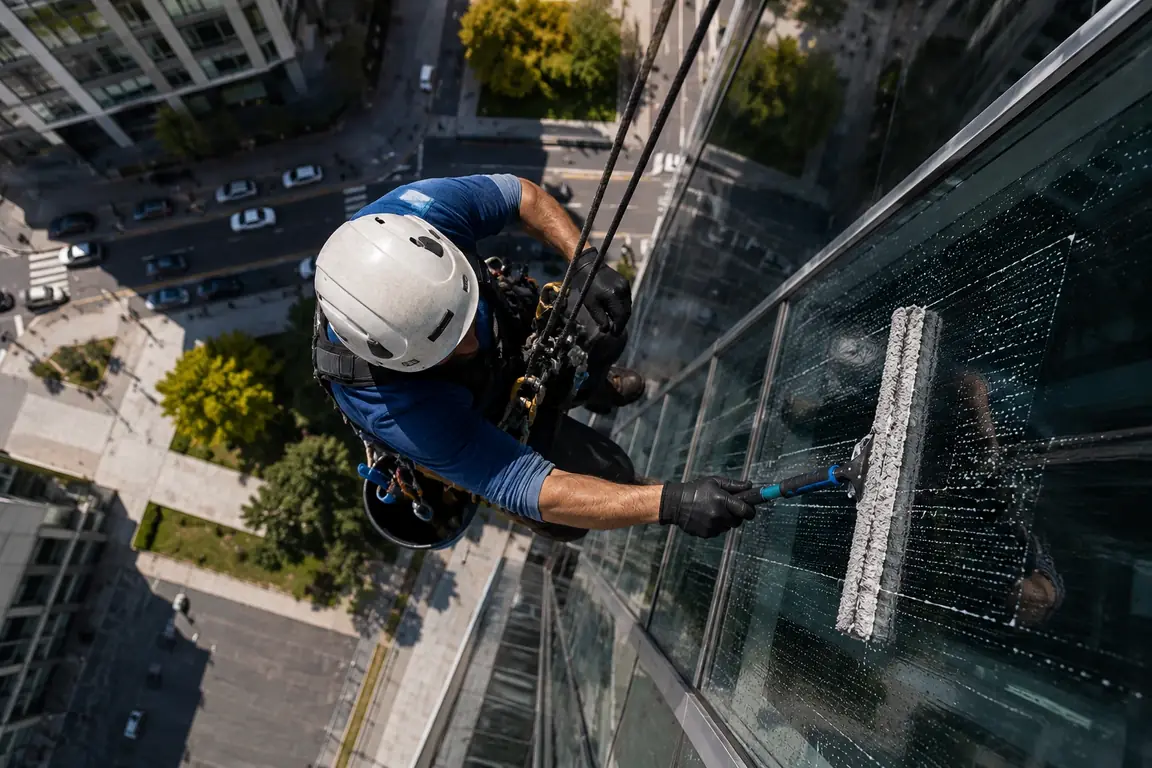
Quick answer: On a building that's trading or occupied, the real cost of scaffolding often isn't the hire price. It's the weeks of reduced footfall, darker offices, hidden signage, a climbable route for intruders, and tenant complaints. Rope access avoids most of that. There's no structure left overnight, frontages and signage stay visible, windows stay clear between drops, and a typical maintenance job is measured in days on site, not weeks of hire.
The five hidden costs of a scaffold
| Hidden cost | Who feels it | How rope access compares |
|---|---|---|
| Hidden frontage and signage | Retail, restaurants, hotels | Nothing fixed in front of the shop. Brief exclusion zones only. |
| Lost natural light and views | Office tenants, residents | Netting stays up for the full hire. Ropes move on drop by drop. |
| Security | Everyone | Scaffolds are a known route for burglars, so they need alarms or monitoring. Ropes come down every evening. |
| Pavement obstruction | Pedestrians, deliveries, the council | A fixed structure, licence and hoarding vs a temporary, moving zone |
| Programme overrun | Owner, tenants | Each extra week of hire adds cost and complaints. Rope teams work to a fixed number of days. |
When disruption really matters
- Retail and hospitality frontages: a scaffold over a shop window during peak season can affect trading. Some leases allow tenants to claim for loss of trade or seek rent concessions during major works.
- Hotels: guests notice netting and noise immediately, and it shows up in reviews.
- Office lettings: scaffolding on a building with vacant floors can slow lettings and viewings.
- Residential blocks: residents complain about privacy, light and security for the whole hire period.
What rope access disruption actually looks like
- An exclusion zone below each drop, moved as work progresses.
- Technicians passing windows, with tenants given notice and the option to lower blinds.
- Some noise if cutting, drilling or grinding is involved, which can be timed out of hours.
- Rigging on the roof, with no ground structure.
At the end of each day, everything comes down from the façade.
When scaffolding is still the right call
Rope access isn't always the answer. If the work needs a fixed platform for weeks, involves heavy materials, or covers a whole elevation (re-cladding, re-rendering, structural masonry), scaffold is usually right. Planning can then focus on reducing its impact: printed wraps, well-lit walkways and short programmes. See rope access vs scaffolding.
How to make the business case to an owner or landlord
Compare the options on total impact, not hire price alone:
- Access cost: scaffold erection, hire, licence and alarms vs rope access team-days.
- Programme: weeks vs days.
- Tenant impact: frontage, light, noise, security.
- Lease risk: any tenant rights to compensation or rent abatement during works.
- Reputation: reviews, complaints, lettings.
FAQ
Is rope access quieter than scaffolding?
Erecting and dismantling scaffolding is noisy. Rope access rigging is near-silent. The task itself, such as drilling, makes the same noise whichever way you reach it.
Can rope access work be done out of hours?
Yes. Early mornings, evenings or weekends are common for entrances and frontages, usually at a higher rate.
Does rope access need a council licence?
Not normally for the access itself, because there's no structure on the highway. Pavement management still needs planning.
Keep your building trading
Tell us how the building is used and we'll plan around it. See our rope access in London and services, or request a site survey.
Sources
- Highways Act 1980, s.169 (scaffold licences).
- HSE, Working at height.


