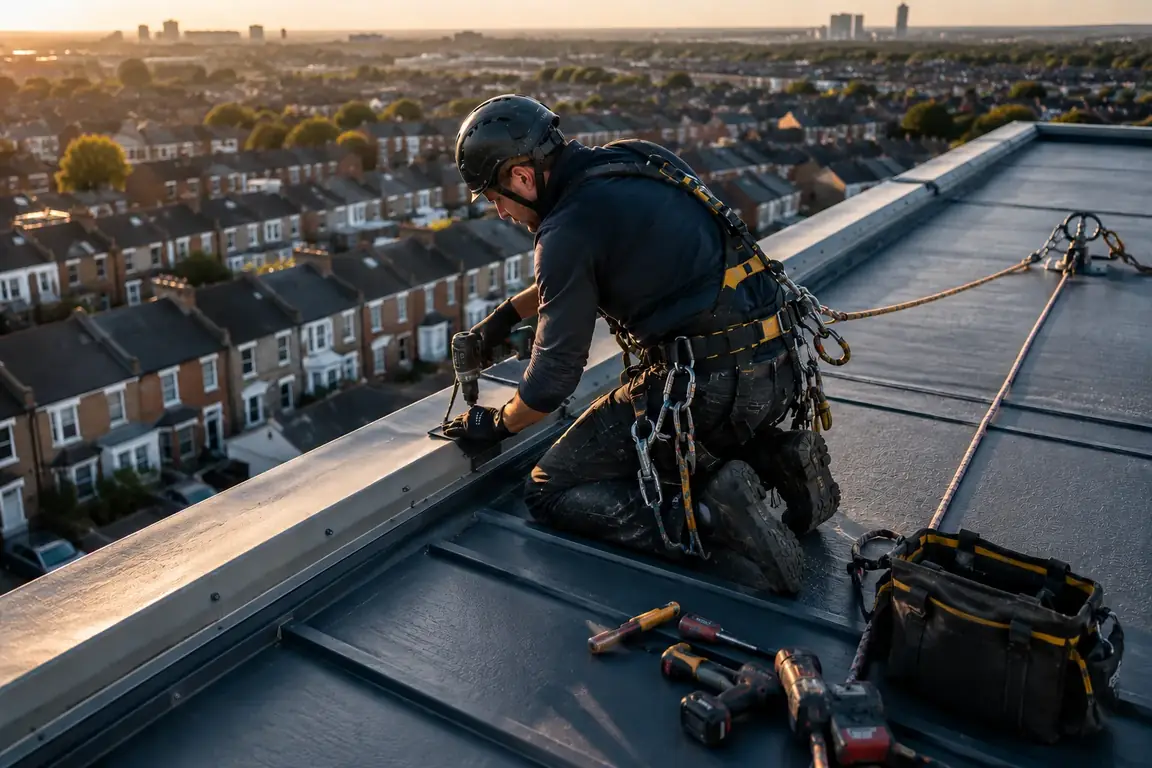
Quick answer: The highest-risk defects on a building often sit where nobody can see them: the tops and backs of parapets and copings, cornices, chimneys, set-back floors, light wells, canopy tops and the undersides of overhangs. Binoculars and drones show the surface. Rope access puts a technician within arm's reach to tap-test, hand-check fixings and joints, photograph close up, and make safe loose material on the spot.
The hard-to-reach areas, and what goes wrong
| Area | Common defects | Why it's missed |
|---|---|---|
| Parapets & copings | Open joints, rocking stones, failed DPC, cracked render, vegetation | The top and inner face can't be seen from the street |
| Cornices & string courses | Cracked or detached sections, corroded cramps, water traps | Heavy, high, and directly over pavements |
| Chimneys & stacks | Loose pots, failed flaunching, leaning, open joints | Often only visible from neighbouring roofs |
| Set-back upper floors | Failed sealant, blocked drainage, leaks | Hidden behind the main façade line |
| Light wells & internal courtyards | Blocked gutters, failed downpipes, biological growth | No vehicle or scaffold access; rarely looked at |
| Canopy tops | Debris, ponding, failed fixings, cracked glass | Can't be seen from above or below |
| Soffits & undersides | Loose panels, corroded fixings, spalling concrete | Need close, upward inspection |
| Atria & glazed roofs | Failed seals, cracked panes, gasket slip | Internal height and fragile surfaces |
What close access can do that a drone can't
| Capability | Drone | Rope access |
|---|---|---|
| Overview photos of a large area | ✅ Fast | ✅ Slower |
| Tap testing for hollow or loose material | ❌ | ✅ |
| Hand-checking fixings, cramps and brackets | ❌ | ✅ |
| Checking sealant adhesion | ❌ | ✅ |
| Measuring cracks | ⚠️ Estimated | ✅ With a gauge |
| Removing loose material on the day | ❌ | ✅ |
| Small repairs in the same visit | ❌ | ✅ |
| Flying near people in central London | ⚠️ Restricted by CAA rules and permissions | n/a |
Drones are useful for a quick first look or to spot where to send the rope team. For a defect report you can act on, you need hands on the building. See drone vs rope access inspection.
Why rooflines matter so much
Rooflines take the worst of the weather and sit directly above pavements and entrances. They also leak into the building when copings, flashings or upstands fail, and that water can appear floors below. Inspecting them is one of the most valuable things a façade programme does.
How the inspection is organised
- Survey to plan drops, anchors and exclusion zones.
- Drop-by-drop inspection, including tap testing and hand checks, with GPS- or grid-referenced photos.
- Make-safe on the day where needed, recorded with photos.
- Report with a defect schedule, urgency ratings and marked-up elevations.
FAQ
Can rope access reach light wells and courtyards?
Yes. It's often the only practical method, because there's no way in for a vehicle or scaffold.
Is it safe to inspect old stone cornices on ropes?
Yes, with the right rigging. Ropes are protected at edges and never loaded on the elements being inspected. The plan is in the RAMS.
Can you repair what you find?
Small repairs and make-safes, yes, often on the same drop. Larger repairs are scoped from the report.
Book an inspection
See our building maintenance and rope access in London, or request a site survey.
Sources
- CAA, drone operating rules (UK).
- Occupiers' Liability Acts 1957 and 1984.


