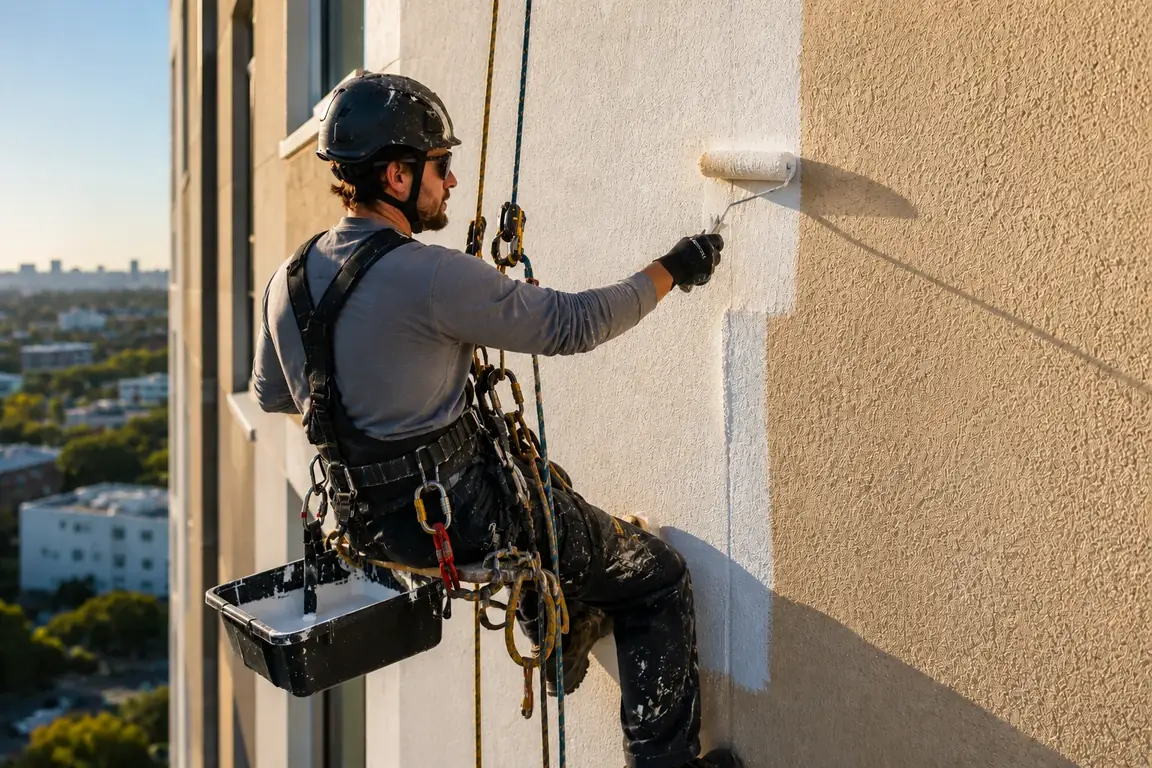
Quick answer: Most exterior paint failures come from poor preparation, not poor paint. A lasting repaint follows a clear sequence: survey, repair, clean, prime, then coat. Plan the work for dry, mild weather, generally above 5 °C and with the surface at least 3 °C above the dew point, as set out in the product's data sheet. In London that usually means spring to early autumn. Before you accept a quote, make sure it states the preparation, the named products and number of coats, the warranty and what happens if the weather stops work.
What your existing paint is telling you
| What you see | What it usually means |
|---|---|
| Peeling or flaking | Poor adhesion, damp behind the paint, or a failed old coating |
| Blistering | Moisture trapped behind the film |
| Chalky powder when rubbed | The coating has weathered and is breaking down |
| Green, black or brown growth | Damp conditions and biological growth |
| White crusty deposits | Salts coming out of masonry, a sign of moisture |
| Cracks in the paint | Movement or cracks in the render or masonry underneath |
| Rust staining | Corroding metal, fixings or reinforcement |
The cause matters. Painting over damp, flaking or rusting surfaces without dealing with the cause means the same problems return, usually within a year or two.
What gets painted, and why it matters
- Render and masonry. Needs a breathable coating suited to the surface. Cracks and failed areas must be repaired first.
- Concrete. Often needs repair of spalled areas and a suitable protective coating.
- Metalwork. Needs rust treatment, a primer and a compatible topcoat.
- Cladding panels. Check with the manufacturer that painting is allowed and which products suit.
- Older and listed buildings. May need breathable or mineral coatings, and permission for colour or material changes. Check with the local planning authority first.
The preparation sequence
- Survey the building. Record the substrate, the existing coating, defects and the amount of damp. Test areas with a moisture meter where the data sheet requires it.
- Repair first. Fill cracks, repair spalling, replace failed sealant and fix leaks.
- Remove loose and failing paint back to a sound edge.
- Clean. Use a controlled wash and a biocidal treatment where there is growth. Avoid high pressure that damages the surface.
- Treat metal. Remove rust, then prime straight away.
- Prime or stabilise the surface where the system calls for it.
- Test patch if the substrate or product is new to the building.
- Apply the coats at the coverage rate and drying times in the data sheet.
- Record batch numbers, dates and conditions.
Skipping steps is how a repaint ends up looking good for six months and then failing.
A note on older paint
In buildings that pre-date the 1960s, older layers of paint may contain lead. Sanding or burning it off creates hazardous dust. The Control of Lead at Work Regulations 2002 may apply. If your building is of that age, ask the contractor how they will test for lead and manage the work before any abrasion.
Weather and timing
Paint cures properly only within a range of conditions. The data sheet sets the limits, but as a guide:
- Temperature. Generally above 5 °C for the surface and the air, and not in strong direct sun on hot surfaces.
- Dew point. The surface should be at least about 3 °C above the dew point, or condensation will form on it.
- Rain and damp. Surfaces must be dry, and rain must stay off the coating while it dries.
- Wind. High winds affect safe working on ropes and can blow dust and paint.
Autumn mornings often bring dew and condensation, so work may start late and finish early. Build weather days into the programme. A repaint that has to wait for good weather is better than one that is rushed in poor conditions. If damage is leaving the building open to water, see our winter exterior maintenance checklist.
Rope access or scaffold for painting?
Rope access suits tall elevations, detailed areas and buildings where scaffold would block entrances or take weeks. Scaffold is often better for heavy preparation, such as large-scale render replacement, abrasive blasting or work on low-rise buildings where scaffold is cheap. Many projects use both. Our guide to rope access vs scaffolding sets out how to decide.
What to ask contractors before you accept a quote
- What survey has been done, and what does it show about damp, cracks and old coatings?
- What exactly is included in the preparation, and what is excluded?
- Which products will be used, how many coats, and at what coverage rate?
- Who gives the warranty: the manufacturer, the contractor, or both, and what does it cover?
- What is the weather policy and how will delays be handled?
- How will glazing, ground areas and neighbours be protected, and how is wash water managed?
- How will the work be supervised and recorded?
FAQ
How long does an external repaint last?
It depends on the substrate, the coating, the preparation and the exposure. Many systems last several years, and the manufacturer's guidance gives a realistic range. Poor preparation shortens it considerably.
Can painting stop a leak?
Not by itself. Paint can help protect sound surfaces, but cracks, failed joints and open details must be repaired. See our guide to façade leak investigation.
Should the building be pressure washed first?
Cleaning is essential, but pressure should be controlled so it doesn't damage the surface or force water into cracks and joints.
Can you paint in winter?
Only during mild, dry spells that meet the product's limits. Otherwise it is usually better to wait.
Talk to us about your repaint
Send us the building address and photographs of the areas you want painted. We will tell you what we can see and what preparation is likely to be needed. Read about our external painting service, or request a site survey.
Sources
- Manufacturer technical data sheets for the coating system (application limits, coverage, drying times).
- BS 6150, Painting of buildings: code of practice. Check the current edition.
- HSE guidance on lead paint, and the Control of Lead at Work Regulations 2002.


