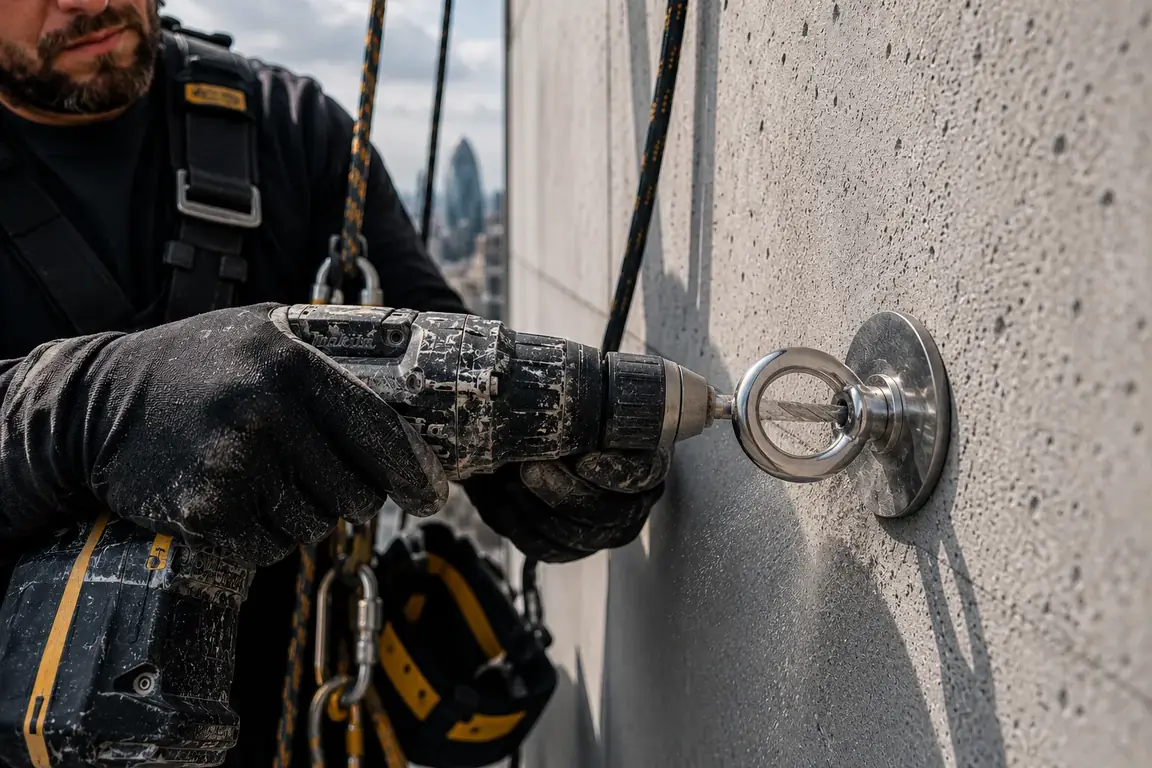
Quick answer: Rope access is designed so that a technician who becomes stuck or unwell can be reached and brought to safety by their own team, without relying on the emergency services to climb the building. The safety rests on three things: two separately anchored ropes, technicians trained in rescue, and a written, site-specific rescue plan with the equipment on site. As the person responsible for the building, you should expect to see the rescue plan before work starts, and you should know how the plan involves your building, such as roof access and who to call.
Why a rescue plan is part of the job
Working at height always carries the possibility that someone will need help: a medical problem, an equipment issue, a sudden weather change. The IRATA International Code of Practice treats rescue as a core part of planning, not an afterthought. A contractor should have thought through how every technician on the job would be reached and brought down before anyone leaves the roof.
The Work at Height Regulations 2005 also require emergency and rescue arrangements to be in place for work at height.
The system: two ropes and a trained team
Rope access normally uses two separately anchored ropes for each technician: a working line that supports them as they move and work, and a safety line that acts as a back-up. If one fails, the other holds.
The people matter as much as the equipment:
| Role | Rescue responsibility |
|---|---|
| Level 1 technicians | Trained to take part in a rescue under supervision, and to assist the rescue team |
| Level 2 technicians | Trained to carry out rescues as part of the team, still under Level 3 supervision |
| Level 3 supervisor | Responsible for the site, the rescue plan and its readiness, and for deciding when to stop work |
| Everyone on the team | Knows the plan, the equipment and their role before work starts |
You can read more about what the levels mean in our guide to IRATA certification.
What a site-specific plan contains
A rescue plan is not a generic document. It describes this building, this job and this team:
- The work and the rigging: where the drops are, and how each person is anchored
- Rescue methods suited to the layout: lowering a casualty to the ground, or raising them to the roof
- Equipment: the rescue kit, where it is kept, and that it has been checked
- Roles: who leads, who carries out the rescue and who calls for help
- Communication: radios or phones, and how the team stays in contact
- Emergency contacts: the emergency services, the building's security and the site manager
- Access for the emergency services: how they reach the roof or ground, and who meets them
- First aid: trained personnel and equipment on site
- Weather limits: the conditions in which work stops
What the building owner or manager should provide
A good rescue plan depends on information only you can give. Expect to be asked about:
- roof access: keys, codes and who controls them
- the building's emergency procedures and how the team should report an incident
- a named contact on site and out of hours
- ground access for ambulances and fire crews
- the area below the work: who is there and how it can be cordoned off
- any hazards the contractor might not see, such as plant, fragile roof areas or live equipment
If you want to see how this fits into the full planning process, see our health and safety and IRATA standards page.
Questions to ask a contractor
- Can I see the rescue plan for my building before work starts?
- How many trained rescuers are on site, and who is the Level 3 supervisor?
- Where is the rescue equipment kept, and when was it last checked?
- How would a casualty be reached on each elevation, and how long does the plan allow?
- Is there a qualified first aider on the team?
- What are the weather limits for stopping work?
- How will we communicate if something goes wrong?
- What do you need from us to make the plan work?
Our guide to how to choose a rope access contractor covers the other questions to ask before appointing one.
Why anchors and equipment matter for rescue
A rescue relies on the same anchors and equipment as the work itself. If the anchors are untested or the rigging is poor, the rescue plan is compromised. That is why certified anchors and regular inspection are so important. See our guide to anchor point inspection.
Why a plan beats relying on the emergency services
The emergency services can reach a building quickly, but they may not have the equipment or the immediate access to bring someone down from a high elevation. A rope access team that is trained and equipped to rescue its own people can act immediately, while the emergency services are on their way. The plan should still include them: they need to be called and to know where to go.
FAQ
Is rope access safe?
When carried out to the IRATA code of practice, with two ropes, trained and assessed technicians, Level 3 supervision and a rescue plan, it has a strong safety record. The key is that the controls are in place on every job.
Who is responsible for rescue?
The contractor is responsible for the rescue plan and the equipment. The building owner or manager should provide access and information and should check that the plan exists.
What happens if the weather changes?
The plan sets weather limits. If conditions exceed them, the Level 3 supervisor stops work and the team comes down.
Can we see the plan?
You should be able to. A contractor who cannot show you a site-specific rescue plan has not finished their planning.
Talk to us
If you would like to know how we plan and supervise work on a building like yours, ask us for an example risk assessment and method statement. Read about rope access in London, or request a site survey.
Sources
- IRATA International, International Code of Practice for Industrial Rope Access (ICOP). Check the current edition.
- The Work at Height Regulations 2005 (legislation.gov.uk).
- HSE, Work at height guidance.


