Quick answer: A curtain wall is a lightweight glass and metal façade hung from the building structure. It keeps water out with layers of defence: gaskets and seals that stop most water, drainage paths that carry the rest out, and sealant at joints and perimeters. These components age. Rubber gaskets harden and shrink, sealant fails, drainage paths block, and glazing units can lose their seal and mist up. Leaks often show up far from the source. Regular inspection, clearing and renewal of the weather seals extends the life of the system, and a proper investigation is better than guessing when a leak appears.
How a curtain wall keeps water out
| Layer | What it does |
|---|---|
| Outer gaskets and seals | Stop most rain at the surface |
| Pressure plates and caps | Hold the glass and gaskets tight and protect the joint |
| Drainage and ventilation paths | Carry any water that gets past the outer seal down and out through weep holes |
| Inner seals | A second line of defence, often an air and vapour barrier |
| Perimeter sealing | Seals the system to the building structure and neighbouring elements |
| Sealant at joints | Fills joints where gaskets do not apply |
The design assumes some water will get in and gives it a safe way out. If the drainage paths are blocked, that water has nowhere to go and can reach the interior.
What ages and fails
- Gaskets made of rubber or synthetic materials harden, shrink and crack with age, UV and heat. Failed gaskets leave gaps at corners and joints.
- Sealant at perimeters and joints cracks, splits and loses adhesion. See façade sealant failure.
- Drainage paths block with dirt, debris and growth, or are sealed by mistake during other work.
- Sealed glass units can lose their edge seal, letting moisture in between the panes, which shows as mist or condensation that cannot be wiped off.
- Fixings and pressure plates loosen or corrode, reducing the pressure on the gaskets.
- Thermal and structural movement works the joints, particularly on large, exposed façades.
Signs of trouble
| What you see | What it may mean |
|---|---|
| Damp patches or drips inside near windows or transoms | Water getting past the seals or blocked drainage |
| Staining on ceilings or finishes below a glazed area | Persistent water entry |
| Misting or condensation between panes | Failed sealed unit |
| Gaps, cracks or shrinkage in gaskets | Ageing seals |
| Peeling or split sealant at perimeters | Failed weatherproofing |
| Water standing or staining around transoms and weep holes | Blocked drainage |
| Wind noise or whistling | Gaps in the seals |
| Corrosion or loose fixings on caps and plates | Reduced clamping and potential failure |
Investigating a leak
Curtain wall leaks are rarely where they appear. Water can travel along transoms, mullions and the inner face before dripping out. A sensible approach is:
- Keep a leak diary of when and where leaks appear, with rainfall and wind
- Inspect the exterior closely for failed seals, sealant and blocked drainage
- Water test the suspect areas systematically. The standard test method for curtain walling is BS EN 13051, which tests watertightness on site
- Repair at the source, not just at the point where it drips
- Retest to confirm the repair worked
See our guide to façade leak investigation.
What maintenance looks like
| Task | Why |
|---|---|
| Inspect gaskets, caps and sealant | Find ageing before it leaks |
| Clear weep holes and drainage paths | Keep the water exit open |
| Clean frames and glass with suitable products | Avoid damage to seals and finishes. See cleaning different façade materials |
| Re-seal failed joints and perimeters | Restore the first line of defence |
| Replace failed glazing units | Fix misting and restore performance |
| Tighten and replace fixings | Maintain the pressure on gaskets |
| Record findings and works | Build a history |
Do not seal weep holes or drainage paths with sealant during repairs. It can trap water inside the system and make leaks worse.
Gasket replacement versus sealant over the top
It is tempting to run sealant over a failing gasket. That can help temporarily, but it may block drainage paths, trap moisture and make later repairs harder. Where gaskets have failed, replacement is the proper repair, and it may need glazing to be removed and refitted. Ask the contractor what they propose and whether it follows the system manufacturer's guidance.
Access for inspection and repair
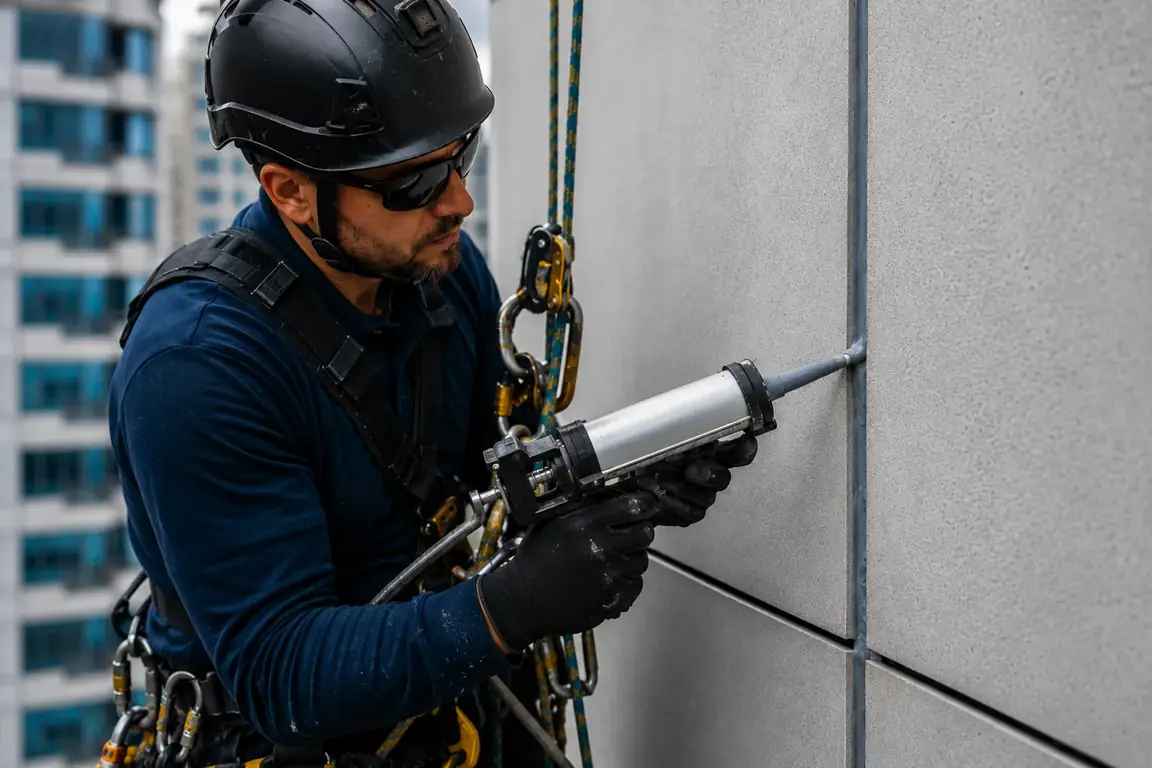
Curtain walling is tall, smooth and often hard to reach. Rope access lets technicians inspect and repair joints, seals and perimeters along each elevation, and work at arm's length from the system. For major glazing replacement, specialist equipment such as cradles, platforms or cranes may be needed. See rope access vs MEWP and high-rise window cleaning.
Questions to ask
- Who manufactured the system and what do they recommend for maintenance?
- When were gaskets and sealants last inspected or renewed?
- Are the drainage paths clear?
- Are there records of previous leaks and repairs?
- What does the warranty require?
- Is the repair method compatible with the system?
FAQ
How long do curtain wall gaskets last?
It varies with the material, exposure and system. Many last for decades, but they harden and shrink with age. Inspect them regularly and plan replacement before they fail.
Can we just re-seal the leaking joint?
Only if that joint is the source. Water often enters elsewhere, and sealing a drainage path can make things worse.
What causes misting between panes?
Failure of the sealed unit's edge seal, letting moisture in. The usual fix is to replace the unit.
How often should curtain walling be inspected?
At least once a year, and after storms. Follow the manufacturer's guidance.
Talk to us
If you have a leaking or ageing glazed façade, send us photographs and the address. We can inspect the seals from outside and tell you what we see. Read about our waterproofing and sealant works services, or request a site survey.
Sources
- BS EN 13051, Curtain walling: watertightness, site test. Check the current edition.
- The curtain wall manufacturer's maintenance and glazing guidance.
- CWCT (Centre for Window and Cladding Technology) guidance on curtain walling.


