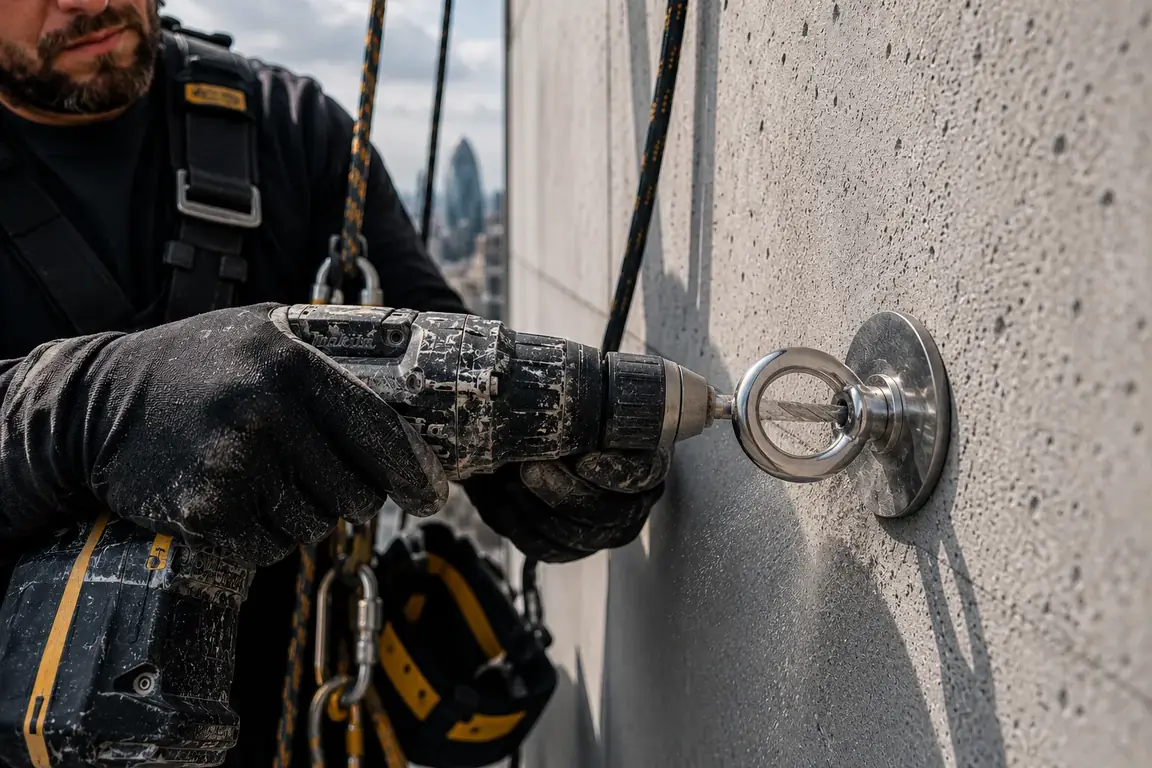
Quick answer: Rope access is widely used on London buildings, but it is often misunderstood. It is not only for very tall buildings, it is not automatically cheaper or more dangerous than other methods, and the people doing it are trained and assessed technicians, not window cleaners on ropes. It is a work positioning method that suits some jobs very well and others not at all. A good contractor will tell you which is which. Here are eight myths and what is actually true.
At a glance
| Myth | Reality |
|---|---|
| Rope access is only for very tall buildings | It is used wherever other methods are impractical, at almost any height |
| It is always cheaper than scaffolding | Often for short or scattered work, but not for long programmes |
| It is more dangerous than scaffold | Done to the code of practice, it has a strong safety record. It depends on the controls |
| The technicians are just cleaners on ropes | They are trained, assessed and certified, and carry out skilled trades |
| It needs special anchors on every building | Certified anchors help, but rigging can often be arranged without them |
| It disrupts tenants more | Usually it disrupts less than scaffold |
| A drone makes rope access unnecessary | Drones screen. They cannot touch, test or repair |
| Any contractor can do it | Certification, supervision and planning separate good from poor |
Myth 1: "Rope access is only for very tall buildings"
Height is only one reason to choose it. Rope access also suits mid-rise buildings with awkward access, buildings on busy streets where scaffold or a platform would block the pavement, heritage buildings where heavy scaffolding is unwelcome, and jobs in difficult positions such as lightwells, atria and behind projections. The deciding factor is whether it is the safest practicable method for that task. See rope access vs MEWP.
Myth 2: "It is always cheaper than scaffolding"
For short, targeted or scattered work, rope access is often cheaper, because there is nothing to erect or hire. For long programmes, work that needs materials stored at height, or heavy repairs on one elevation, scaffold can work out cheaper. See rope access vs scaffolding and how rope access is priced.
Myth 3: "It is more dangerous than scaffold"
The safety of any method comes from how it is controlled. Rope access uses two separately anchored ropes, trained and assessed technicians, supervision by a Level 3, and a rescue plan. IRATA publishes safety statistics for its members, and you can ask a contractor for their own record. Poorly planned work by any method is dangerous. See work at height: the hierarchy of control and rope access rescue plans.
Myth 4: "The technicians are just cleaners on ropes"
IRATA technicians are trained and independently assessed at Level 1, 2 or 3, and the work they do ranges from inspection and testing to sealing, painting, repairs and installation. Rope access is the access method, not the trade. See IRATA certification explained.
Myth 5: "The building needs special anchors"
Certified anchor points make access safer and quicker, and they are worth having. But they are not always essential for a one-off job. A competent team can often arrange suitable rigging from the structure, and a contractor can also install certified anchors if needed. What matters is that whatever is used has been checked and is suitable. See anchor point inspection and fixed anchor systems compared.
Myth 6: "It disrupts tenants more"
Often the opposite. There is no scaffold blocking windows, light or entrances, and no long programme of erection and dismantling. Disruption comes mainly from the exclusion zone below the work and the access routes used. See public safety during façade work and tenant notice template.
Myth 7: "Drones make rope access unnecessary"
Drones are excellent for a fast first look and for washing large, simple areas, but they cannot tap, test, measure, repair or install. The best results usually come from using both: screen with a drone, then follow up by hand where needed. See what drone inspections can and can't show.
Myth 8: "Any contractor can do it"
Rope access is a specialist discipline. Look for IRATA-certified technicians, a Level 3 supervisor on site, a site-specific RAMS and rescue plan, suitable insurance, and relevant experience. A low quote from an unqualified team can cost far more if something goes wrong. See how to choose a rope access contractor and contractor insurance.
When rope access is not the answer
An honest contractor will say so when:
- the work needs heavy materials or lifting that rope access cannot handle
- a long programme on a single elevation would be better served by scaffold
- safe permanent access already exists and suits the task
- weather or building constraints make rope access impractical
FAQ
Is rope access safe?
When done to the IRATA code of practice with proper planning, supervision and rescue arrangements, it has a strong safety record. Always check that the controls are in place.
What can rope access be used for?
Inspection, cleaning, sealing, painting, repairs, installation of signage and anchors, and more. See rope access in London.
How do I know if a contractor is competent?
Ask for IRATA certificates, a sample RAMS and rescue plan, insurance details and examples of similar work.
Does the method affect the price?
Yes, along with the number of drops, the scope and the access conditions.
Talk to us
If you are not sure whether rope access suits your building, send us the address and what you need. We will say honestly whether it does. Read about our building maintenance service, or request a site survey.
Sources
- IRATA International, International Code of Practice for Industrial Rope Access (ICOP), and IRATA's published safety statistics. Check the current editions.
- The Work at Height Regulations 2005 (legislation.gov.uk).
- HSE, work at height guidance, including its guidance on rope access.


